





When it comes to smartphone security, Samsung has always managed to protect its smartphones with Knox security. With hardware-level implementation, Knox acts as a physical barrier between data breaches and hacks. Now, it seems like with One UI 9, Galaxy phones will further become impregnable with ARM's Memory Tagging Extension (MTE) implementation.
One UI 9 May Unlock Memory Tagging Extension (MTE) on Samsung Phones
A new report shared by Android Authority outlines how future Galaxy phones could gain ARM's coveted Memory Tagging Extension (MTE) feature with the One UI 9 update based on Android 17. The publication managed to spot some code strings inside Samsung’s Auto Blocker app, which suggests the same.
For those unaware, ARM introduced MTE back in 2018 with its 8.5-A architecture. The primary purpose of this feature is to detect, identify and plug memory leaks inside smartphones, which can lead to RAM misuse. With MTE on, devices running ARM processors can deploy system-level checks which ensures proper apps, services and system components utilise the amount and frequency of RAM allocated for them.
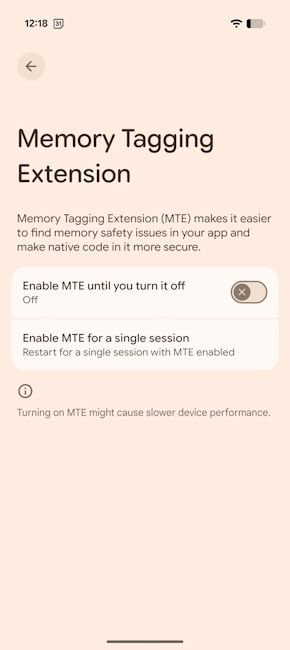
As it is evident from the above image, with One UI 9, users will gain a new "Enable MTE until you turn it off" toggle inside a dedicated Memory Tagging Extension menu. There will also be an option to "Enable MTE for a single session", which means that MTE will stay on until the next restart cycle of the smartphone.
Moreover, with MTE, smartphones can ensure that the operating system runs smoother, experiences lesser crashes and jitters and also ensure overall system-level stability. In short, MTE in One UI 9 could improve RAM allocation and management by Galaxy phones, making them safer and effecient.
However, MTE might bring its own set of tradeoffs. The publication notes that one of the code strings reads: “This can reduce your phone’s performance.” So, while MTE remains on, users might not be able to extract the maximum performance out of their phones. This is expected since a large chunk of performance depends on maximum RAM allocation and MTE prevents both overuse and misuse.
That said, it is still unclear if Samsung will bring MTE to every Galaxy phone running One UI 9 or preserve it for newer launches. It could stay exclusive to its flagship "Galaxy S" series phones since a large chunk of MTE's role directly depends on the processor's power-hungry nature. It's only been a few weeks since the first One UI 9 test build released, so we'll know more in the coming months on the features operation and availability.
Related Articles


