


Qualcomm has officially launched the Snapdragon 8 Elite Extreme Gen 6 at the Snapdragon Summit 2026 with CPU speeds of up to 5.0GHz. On the other hand, Apple's latest A20 Pro chipset tops out at 4.93GHz. Both chips are built on a 2nm process, so both Qualcomm and Apple are on the same footing. To find out which chipset is better, I have compared our Apple A20 Pro benchmark with Qualcomm's new flagship, the Snapdragon 8 Elite Extreme Gen 6.
Snapdragon 8 Elite Extreme Gen 6 vs Apple A20 Pro: CPU
First off, Apple uses a 6-core CPU design with two Super cores at 4.93GHz and four efficiency cores at 2.64GHz. Qualcomm, on the other hand, uses a next-gen 8-core Oryon CPU, which goes up to 5.0GHz. It runs 2x prime cores up to 5.0GHz and 6x performance cores up to 4.0GHz.

The Snapdragon 8 Elite Extreme Gen 6's fastest cores are clocked slightly higher than Apple's Super cores and there are two extra CPU cores on the Qualcomm chipset. Despite that, the A20 Pro still scores higher on Geekbench, as we will find out below.
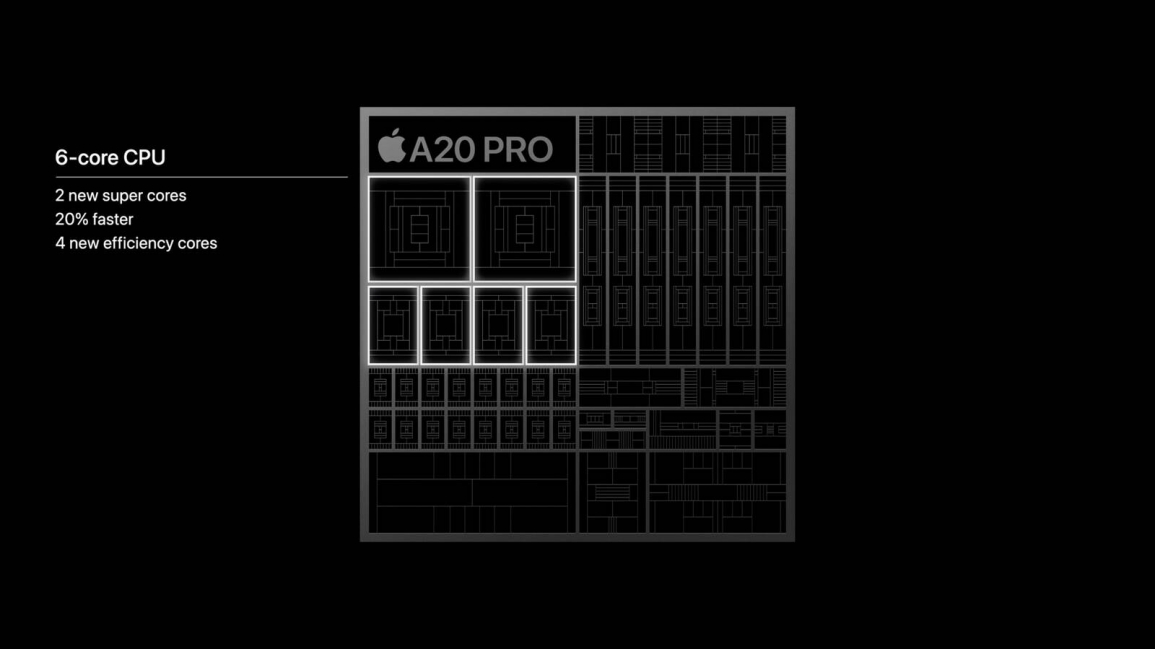
On the cache side, the A20 Pro has 16MB of L2 cache for the Super cores, 8MB of L2 cache for the efficiency cores and a large 36MB system level cache. Next, the Snapdragon 8 Elite Extreme Gen 6 has a 16MB L2 cache (Oryon FlexCache) shared across all eight cores and an 8MB system level cache.
Related Articles

Snapdragon 8 Elite Extreme Gen 6 vs Apple A20 Pro: GPU
The A20 Pro packs a 7-core Apple GPU clocked at 1,620MHz with Neural Accelerators and hardware-accelerated ray tracing. In the 3DMark Wild Life Extreme Stress test, it achieved a best loop score of 8,793 and held 80% stability after 20 loops.

The Snapdragon 8 Elite Extreme Gen 6 features Qualcomm's next-generation Adreno 850 GPU with 18MB of High Performance Memory (HPM) and clocked at 1.45GHz. It comes with dedicated AI matrix cores, which can run advanced AI models on the GPU and also power AI-powered gaming features.
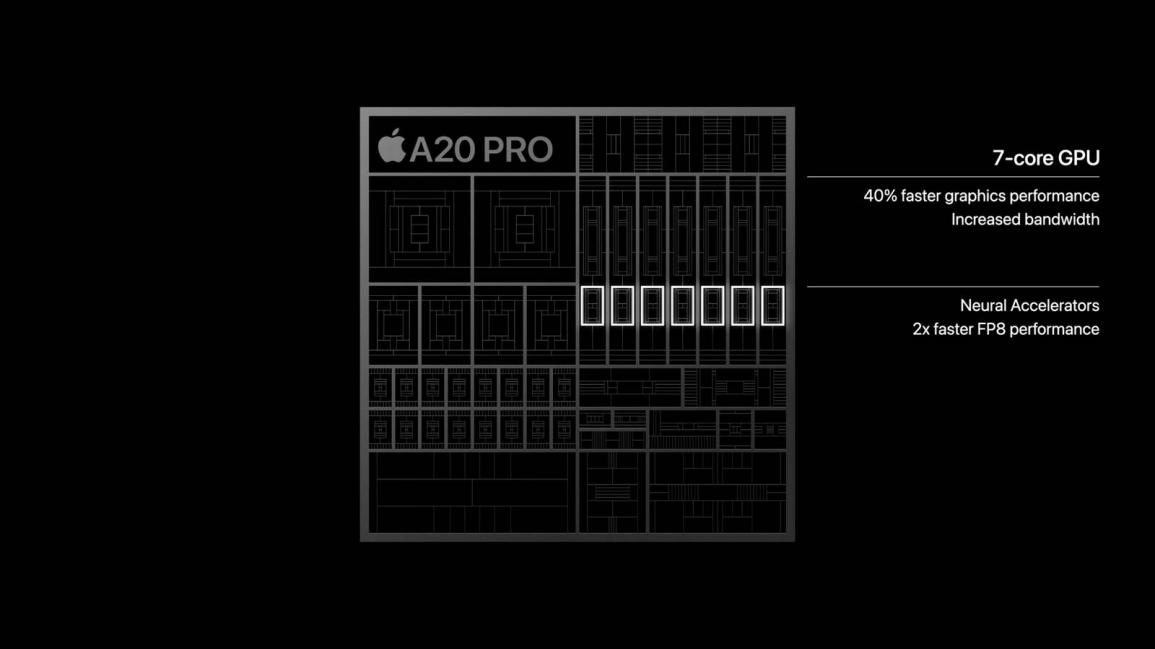
Both companies have added AI-dedicated hardware inside the GPU this year. Apple has put Neural Accelerators into its GPU cores, while Qualcomm uses its new matrix cores to power Adreno Neural Fusion. Qualcomm says it powers AI super resolution and frame generation in games, bringing better and smoother visuals. This AI hardware can also be used to handle larger AI models on the device.
Related Articles

Snapdragon 8 Elite Extreme Gen 6 vs Apple A20 Pro: Geekbench Score
In our test on the iPhone 18 Pro Max, the A20 Pro scored 4,707 in single-core and 12,598 in multi-core on Geekbench 6. And on a Qualcomm reference device, the Snapdragon 8 Elite Extreme Gen 6 scored 4,327 in single-core and 12,873 in multi-core. Even if we consider the reference device score, Apple's A20 Pro is around 9% faster in single-core and the multi-core score is nearly matched.
| Geekbench 6 CPU | Snapdragon 8 Elite Extreme Gen 6 (Claimed) | Apple A20 Pro |
|---|---|---|
| Single-core | 4,327 | 4,707 |
| Multi-core | 12,873 | 12,598 |
Note that this score comes from a test device and they are usually given more power and better cooling than a phone. So I would expect a retail phone with the Snapdragon 8 Elite Extreme Gen 6 to score lower.
| Geekbench 7 CPU | Snapdragon 8 Elite Extreme Gen 6 (Leaked) | Apple A20 Pro |
|---|---|---|
| Single-core | 3,582 | 4,025 |
| Multi-core | 12,247 | 11,599 |
We also ran Geekbench 7 on the iPhone 18 Pro Max, where the A20 Pro scored 4,025 in single-core and 11,599 in multi-core. And a Qualcomm reference device with the Snapdragon 8 Elite Extreme Gen 6 scored 3,582 and 12,247. Here, the A20 Pro leads by around 12% in single-core and the Snapdragon chip leads by around 6% in multi-core.
Related Articles

Snapdragon 8 Elite Extreme Gen 6 vs Apple A20 Pro: NPU
For AI, the A20 Pro has a Dual 16-core Neural Engine that delivers 44 TOPS in FP16 and 73 TOPS in INT8. Qualcomm has also upgraded its Hexagon NPU with a new Hexagon Element Accelerator for transformer models for powering AI chatbots and agents.

On top of that, the Snapdragon 8 Elite Extreme Gen 6 gets 50% larger shared memory. Not to mention, it can handle Mixture of Experts (MoE) models of up to 30 billion parameters. Qualcomm also claims up to 50% faster prefill speed for INT4 models.
Related Articles

Snapdragon 8 Elite Extreme Gen 6 vs Apple A20 Pro: ISP
The Snapdragon 8 Elite Extreme Gen 6 comes with a Spectra ISP that supports Intelligent Pixel Control, Elite Color Engine with 3DLUT support, intelligent stabilisation and Motion Intelligence. It also adds 8K 60fps video capture and 4K 240fps slow-motion video. For context, the Snapdragon 8 Elite Gen 5 was limited to 4K 120fps.

What is interesting is that it also supports Advanced Professional Video (APV). It's a professional video format that Android phones use as an alternative to Apple's ProRes. In addition, Qualcomm says it's the first chip in the world to support the VVC codec, which should record video in smaller file sizes while using less power.
iPhones Pro models have supported ProRes video for years and video recording has long been a strength of the iPhone. Whether APV and 8K 60fps recording make Android flagships more competitive in video recording will depend on how phone makers use these features.
Related Articles

Snapdragon 8 Elite Extreme Gen 6 vs Apple A20 Pro: Thermals
Sustained performance is where the A20 Pro has made the biggest leap this year. We got a remarkable 80% stability in our 3DMark Wild Life Extreme Stress Test, running on the iPhone 18 Pro Max. For comparison, last year's Snapdragon 8 Elite Gen 5 held just 25% stability in the same test. You can see the full gap between the two in our A20 Pro vs Snapdragon 8 Elite Gen 5 comparison.
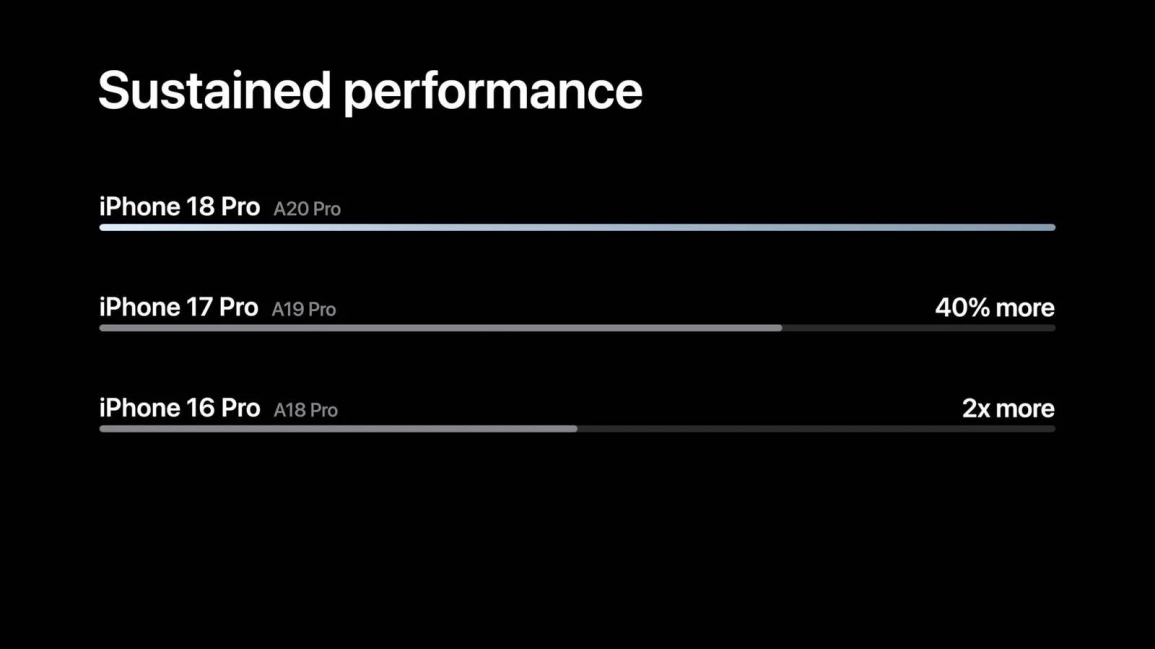
Apple has made two important hardware changes this year to improve the sustained performance and reduce thermal throttling. First, Apple no longer stacks the RAM over the chip and places it around the chip to reduce heat. Second, the iPhone 18 Pro series gets a 3x larger vapour chamber and it sits in direct contact with the chip.
This year, Qualcomm needs to dramatically improve its thermal performance as the Snapdragon 8 Elite Extreme Gen 6 goes up to an astounding 5.0GHz. So, until we test a consumer phone with the Snapdragon 8 Elite Extreme Gen 6, Apple has a lead in sustained performance and thermal management.
Snapdragon 8 Elite Extreme Gen 6 vs Apple A20 Pro: Memory and Connectivity
The A20 Pro comes with LPDDR5X memory at 9,600MT/s on a 96-bit bus, which gives it 115.2GB/s of memory bandwidth. Qualcomm's Snapdragon 8 Elite Extreme Gen 6 supports the latest LPDDR6 memory in a 4x 24-bit configuration, which also adds up to a 96-bit bus. In addition, you get support for LPDDR5X memory and UFS 5.0 storage. In terms of memory speed, the Extreme chipset has an upper hand.
For radio connectivity, the A20 Pro uses Apple's own C2 5G modem and Qualcomm has integrated its new X105 5G modem. As for wireless connectivity, Qualcomm has included FastConnect 8800 with AI-enhanced connectivity. It means you get Wi-Fi 8 and Bluetooth 6.0 on the Extreme chip, while the iPhone 18 Pro series supports Wi-Fi 7 and Bluetooth 6 through Apple's N1 chip.
Snapdragon 8 Elite Extreme Gen 6 vs Apple A20 Pro: Specs Comparison
| Specs | Snapdragon 8 Elite Extreme Gen 6 | Apple A20 Pro |
|---|---|---|
| Process Node | TSMC's 2nm (N2P) | TSMC's 2nm (N2) |
| CPU | 8-core next-gen Oryon CPU (2+6) | 6-core Apple CPU (2+4) |
| CPU Cores | 2x Prime at 5.0GHz, 6x Performance at 4.0GHz | 2x Super cores at 4.93GHz), 4x Efficiency cores at 2.64GHz |
| GPU | Adreno 850 GPU at 1.45GHz, 18MB HPM, AI matrix cores, Adreno Neural Fusion | 7-core Apple GPU at 1,620MHz, Neural Accelerators, hardware ray tracing |
| NPU | Hexagon NPU with Element Accelerator, 50% larger shared memory, 30B+ parameter MoE support | Dual 16-core Neural Engine, 44 TOPS FP16, 73 TOPS INT8 |
| ISP | 20-bit Spectra ISP, 8K 60fps video capture, 4K 240fps slow-motion, APV support, VVC codec, Intelligent Pixel Control | 4K Dolby Vision video recording up to 120 fps, 1080p slow-motion up to 240 fps |
| Storage and Memory | LPDDR6 and LPDDR5X, UFS 5.0 | LPDDR5X, 96-bit bus, 9,600MT/s, 115.2GB/s bandwidth |
| Modem | Snapdragon X105 5G modem, 14.8Gbps peak download speed and 4.2Gbps peak upload speed | Apple C2 5G modem |
| Connectivity | FastConnect 8800, Wi-Fi 8, Bluetooth 6.0 and Thread | Wi-Fi 7, Bluetooth 6 and Thread (Apple N1) |
In conclusion, the Apple A20 Pro is the better chipset both in terms of peak performance and sustained performance. The A20 Pro is around 9% to 12% faster in single-core performance and nearly matches the 8-core CPU on the Snapdragon 8 Elite Extreme Gen 6 with just 6 CPU cores.
That said, Qualcomm has come closer to Apple than ever before. The Snapdragon 8 Elite Extreme Gen 6 appears slightly better than the A20 Pro in peak graphics performance, but Qualcomm still needs to prove its sustained performance over longer sessions. Apart from that, the Extreme chipset brings 8K 60fps recording, VVC codec support and Adreno Neural Fusion for games.
Having said all of that, remember that every Snapdragon score in this comparison comes from reference devices. Qualcomm's early scores look better than what retail phones deliver, so the on-paper lead may not hold up on consumer devices.
All in all, if you want the fastest single-core performance and the best sustained performance, the A20 Pro is the chip to beat. We will put the Snapdragon 8 Elite Extreme Gen 6 through our full benchmark suite once a consumer phone is available. Meanwhile, if you want to know how MediaTek's latest 2nm chip stacks up against Apple, check out our Dimensity 9600 Pro vs A20 Pro comparison.


