


Apple's A20 Pro and MediaTek's Dimensity 9600 Pro are the first flagship chips of 2026 to move to TSMC's 2nm process node and both have now launched. We have already covered the A20 Pro benchmark scores in detail, so in this article, we have compared the Dimensity 9600 Pro against the A20 Pro. We have discussed the CPU performance, GPU and thermals to see how the two chips compare.
Dimensity 9600 Pro vs A20 Pro: CPU
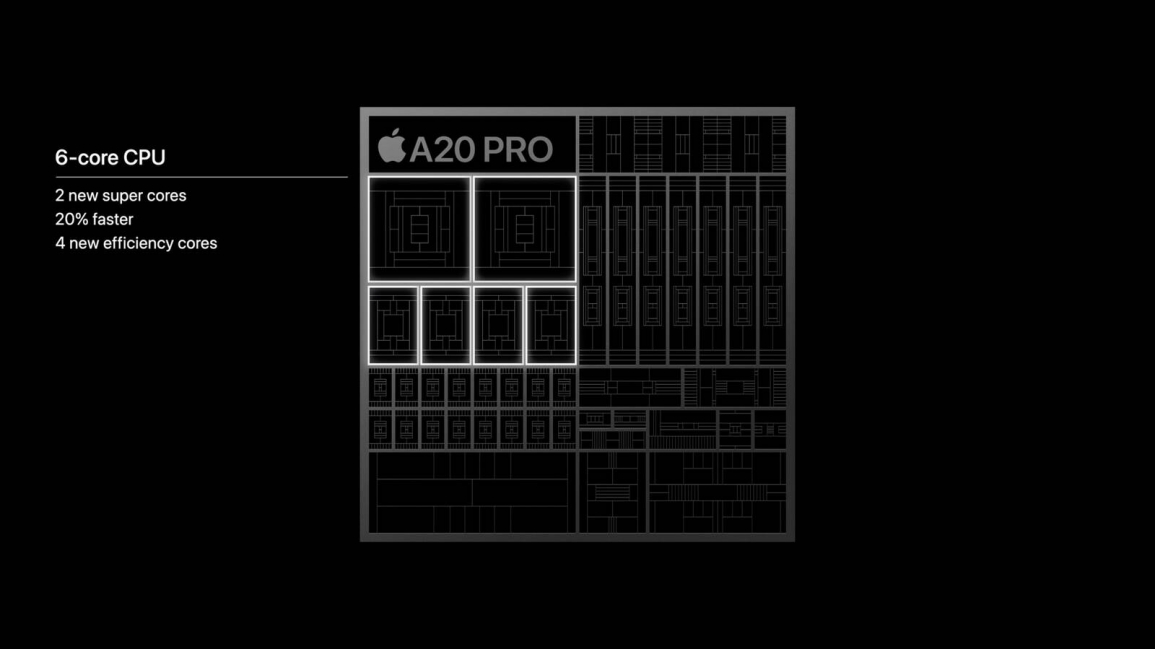
Apple and MediaTek have taken a somewhat similar approach to their CPU design this year. Apple keeps its 6-core CPU, but added two new "Super" cores, which are incredibly powerful and four efficiency cores.
MediaTek, on the other hand, has restructured its CPU cluster, but added two new large cores just like Apple. The Dimensity 9600 Pro switches to a 2+3+3 setup which consists of all big cores. It's a change from the 1+3+4 cluster on MediaTek's earlier flagships. However, for the first time, a Dimensity flagship features two large prime cores rather than a single one.
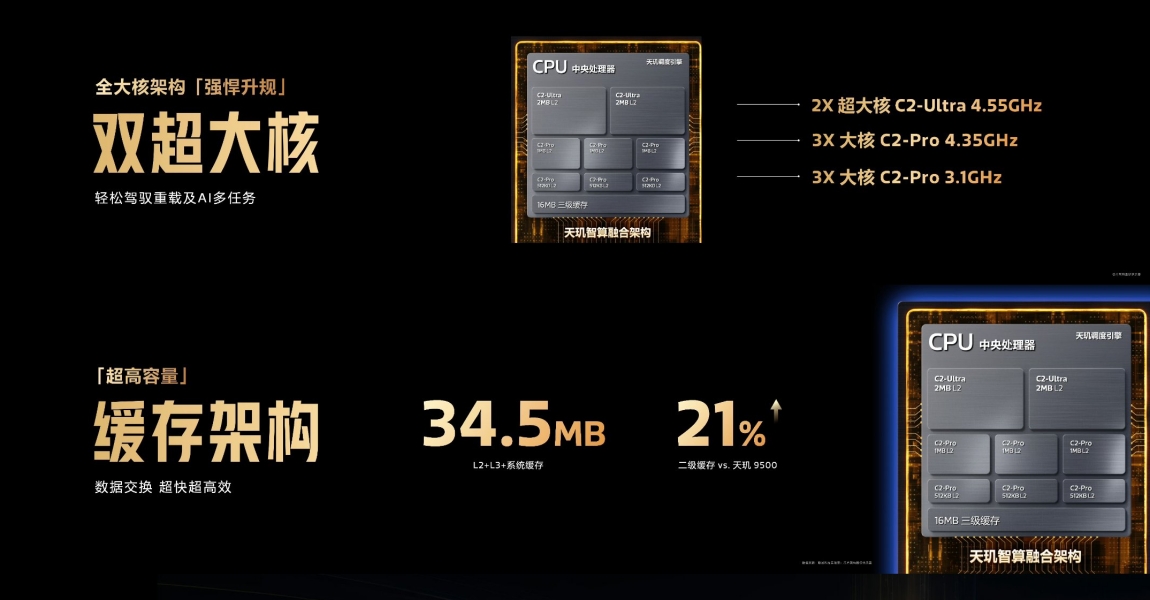
And it brings Arm's latest C2-series CPU cores. The Dimensity 9600 Pro features two large C2-Ultra prime cores and they run at 4.55GHz. Right below, there are 3x C2-Pro cores at 4.35GHz and another 3x C2-Pro cores at 3.10GHz.
That said, Apple's Super cores clock all the way up to 4.93GHz, which is the highest frequency on any smartphone chip so far. The A19 Pro chipset ran its big cores at 4.26GHz, so Apple has raised the peak clock speed noticeably (by almost 700MHz) in a single generation.
On cache, the Dimensity 9600 Pro includes 34.5MB of total cache, including 8.5MB of L2, 16MB of L3, and 10MB of system level cache. The L2 cache is now 21% larger than on the Dimensity 9500 chip. While Apple does not publish its full cache size, its efficiency cores have access to a larger 8MB L2 cache.
Related Articles

Dimensity 9600 Pro vs A20 Pro: Geekbench Score
Now, coming to the benchmark numbers. In an initial Geekbench 6 listing, running on the iPhone 18 Pro, the A20 Pro scored a whopping 4,719 points in single-core and 12,677 in multi-core. MediaTek, for its part, claims the Dimensity 9600 Pro reaches 4,276 in single-core and 12,650 in multi-core on Geekbench 6.4.
| Geekbench 6 | A20 Pro | Dimensity 9600 Pro (Claimed) |
|---|---|---|
| Single-core | 4,719 | 4,276 |
| Multi-core | 12,677 | 12,650 |
On paper, the A20 Pro is about 10% ahead in single-core, while the multi-core scores are nearly identical. That said, MediaTek matches Apple's multi-core result, but with eight cores while Apple gets there with just six cores. Bear in mind that that these are initial figures and MediaTek's claimed numbers are generally on the higher side, so wait for our independent testing.
Apart from that, when both chips showed up on the newer Geekbench 7 benchmark, the gap looked different, in line with our Geekbench 6 and 7 comparison. The A20 Pro posted 4,006 in single-core, while the Dimensity 9600 Pro, running on the upcoming Oppo Find X10 Pro Max, managed 3,242.
| Geekbench 7 | A20 Pro | Dimensity 9600 Pro (Leaked) |
|---|---|---|
| Single-core | 4,006 | 3,242 |
| Multi-core | 11,460 | 11,132 |
It means Apple's single-core lead is around 24%, which suggests MediaTek's claimed number is on the optimistic side. By the way, in our Snapdragon 8 Elite Gen 5 benchmark testing, it scored 3,588 in single-core and 10,207 in multi-core. Basically, both of these new 2nm chips have moved clearly ahead of last year's Qualcomm flagship.
Related Articles

Dimensity 9600 Pro vs A20 Pro: GPU
On the GPU side, there is stiff competition. In the past few years, Apple has slipped behind in raw graphics performance, as MediaTek's Mali GPUs and Qualcomm's Adreno GPUs have taken the lead in peak throughput. However, with the A20 Pro, Apple is trying to close that gap.
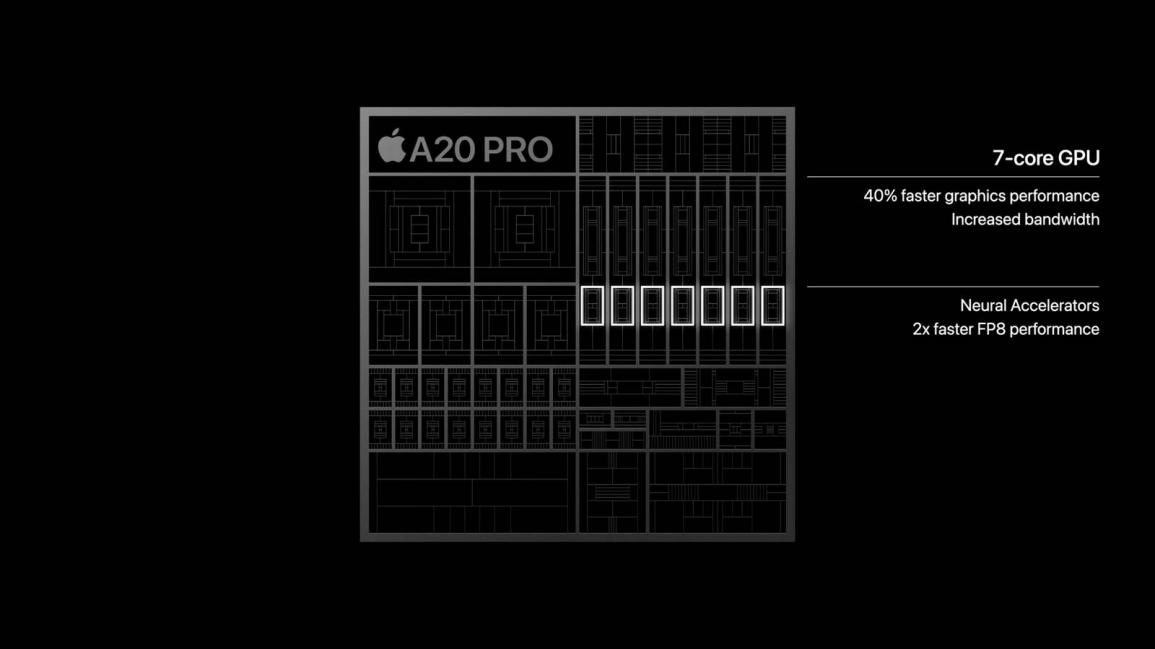
The A20 Pro has received an extra GPU core and now packs a 7-core GPU, up from six on the A19 Pro. Apple claims up to 40% faster graphics and early Metal tests support that, showing the new GPU around 38 to 40% ahead of last year. Apple has also widened the memory bus to feed the GPU, which I have covered in the memory section.
MediaTek uses the new Arm Mali G2-Ultra NX GPU in a 12-core configuration. It's the first Mali GPU to place AI acceleration inside the shader cores themselves, just like the Neural Accelerators on the A20 Pro. MediaTek says it delivers 27% more peak performance while using 24% less power at that peak. As an aside, this GPU first appeared on Xiaomi's Xring O3 chip.
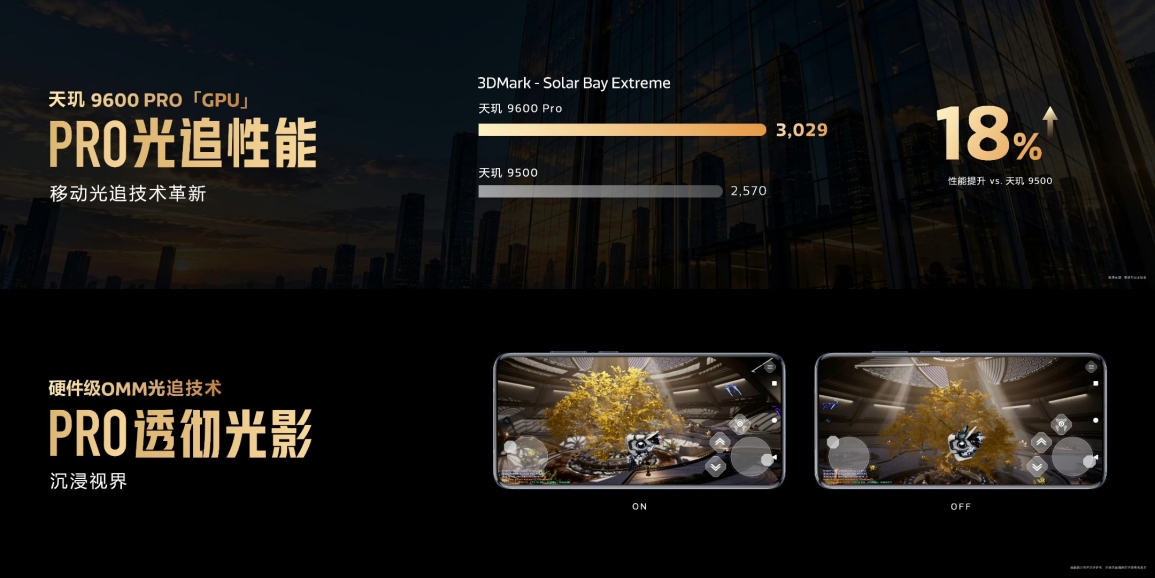
For ray tracing, the Dimensity 9600 Pro has received an 18% gain and its 3DMark Solar Bay Extreme figure of 3,029 points is well above the 2,570 points that the Dimensity 9500 managed.
By the way, both Apple and MediaTek are relying more on neural rendering. Apple is using the Neural Accelerators inside the GPU and MediaTek is using its Dimensity Neural Graphics Architecture for AI upscaling and frame generation.
Related Articles

Dimensity 9600 Pro vs A20 Pro: Thermals and Sustained Performance
This is arguably the most important part of the comparison between Dimensity 9600 Pro and A20 Pro. We already know that reaching a high peak score is one thing, but sustaining it under load is much harder.
When we tested the Dimensity 9500 last year, its performance fell to 59% of the peak during a 15-minute CPU stress run and the drop started within just 2 minutes. Now, two large Arm C2-Ultra cores running at 4.55GHz will generate a lot of heat, so it will be interesting to see how well the chip behaves under sustained load on a consumer phone.
MediaTek, to its credit, is promising notable efficiency gains this year. It claims a 37% reduction in ultra-core power and a 61% drop in multi-core power compared to the Dimensity 9500. If that turns out true, it should enormously help with efficiency.
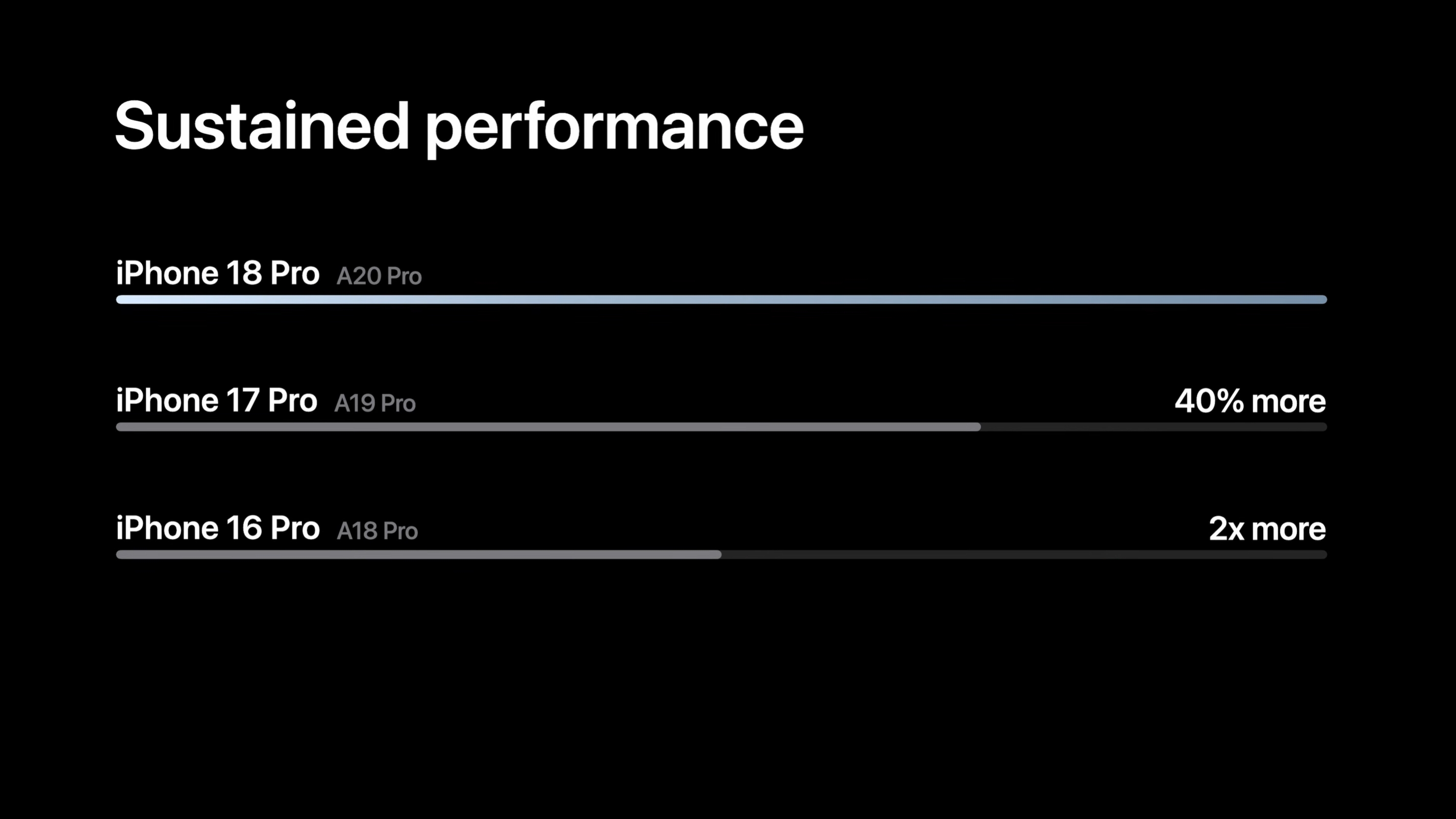
On sustained performance, Apple has a stronger track record. On the A20 Pro, Apple has placed the memory around the SoC (instead of on top) to help dissipate heat and the iPhone 18 Pro adds a 3x larger vapour chamber. Apple says sustained performance is up to 40% better than on the A19 Pro and 2x as good as the A18 Pro.
So, in terms of sustained performance, for both CPU and GPU, I think Apple has done a tremendous job this year with the A20 Pro. We will have to wait and see how the Dimensity 9600 Pro operates under sustained stress.
Related Articles

Dimensity 9600 Pro vs A20 Pro: NPU, Memory and Connectivity
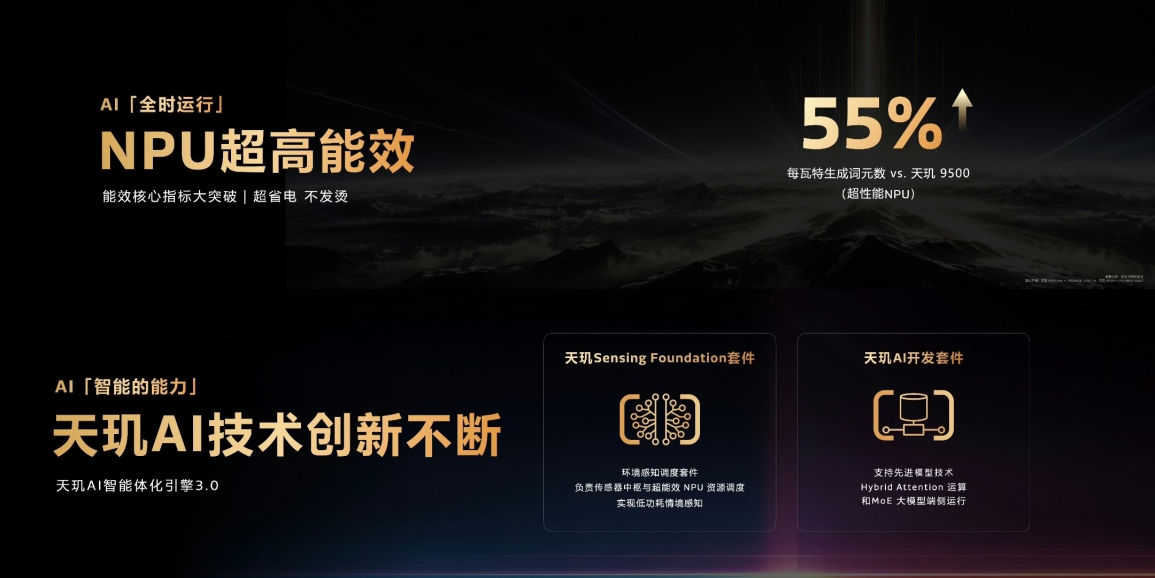
Coming to on-device AI performance, the Dimensity 9600 Pro packs a dual-NPU setup, featuring the high-performance NPU 1090 and a Super Efficient NPU 2.0. MediaTek says it can handle on-device models as large as 30 billion models. On the other hand, Apple has also doubled its on-device AI engine with a 32-core Neural Engine.
Besides all that, MediaTek leads on memory and storage. The Dimensity 9600 Pro is the first mobile chip to adopt LPDDR6 memory, which MediaTek says is 33% faster than LPDDR5X. In addition, it pairs that with UFS 5.0 storage that is twice as fast as dual-channel UFS 4.0.
Apple stays on LPDDR5X but moves to a 96-bit bus for 50% more memory bandwidth, which is a practical way to increase bandwidth for the GPU and Neural Engine without moving to a new memory standard.
As for connectivity, Apple's new C2 5G modem brings mmWave support in the US, satellite connectivity, and 50% faster uploads. Its N1 chip handles Wi-Fi 7 and Bluetooth 6. MediaTek uses its integrated 5G modem, which can go up to 7.3Gbps in peak download speed along with support for Wi-Fi 7 and Bluetooth 6.2.
Related Articles

Dimensity 9600 Pro vs A20 Pro: Specs Comparison
| Specification | Dimensity 9600 Pro | A20 Pro |
|---|---|---|
| Process Node | TSMC N2P (2nm) | TSMC N2 (2nm) |
| CPU | 8-core, 2+3+3, Arm C2-series | 6-core Apple CPU, 2 + 4 |
| CPU Cores | 2x C2-Ultra at 4.55GHz + 3x C2-Pro at 4.35GHz + 3x C2-Pro at 3.10GHz | 2x Super at 4.93GHz + 4x efficiency |
| Cache | 34.5MB (8.5MB L2, 16MB L3, 10MB SLC) | 8MB L2 on efficiency cores |
| GPU | Arm Mali G2-Ultra NX (12-core) | 7-core Apple GPU with Neural Accelerators |
| NPU | Dual NPU, MediaTek NPU 1090 | Dual 16-core Neural Engine (32-core) |
| Memory and Storage | LPDDR6 and LPDDR5X, UFS 5.0 | LPDDR5X, 96-bit bus |
| Modem | Integrated MediaTek 5G modem, up to 7.3Gbps peak download | Apple C2 5G modem |
| Connectivity | Wi-Fi 7, Bluetooth 6.2 | Wi-Fi 7, Bluetooth 6, Thread (Apple N1) |
To conclude, the A20 Pro has the fastest CPU on any phone you can buy today and Arm's latest C2-series cores are still behind Apple's custom CPU design. Apple has a single-core lead of around 10% on Geekbench 6 if we go by MediaTek's claimed number. However, the gap grows to around 24% on Geekbench 7, so there is that.
Nevertheless, MediaTek matches the A20 Pro in multi-core with eight cores and is the first to move to LPDDR6 memory and UFS 5.0 storage. On raw GPU performance, MediaTek arguably starts ahead and we will need retail phones to see whether Apple's 7-core GPU can close the gap.
The deciding factor will be thermal management and sustained performance. Apple's 3x larger vapour chamber and fused packaging give it a clear advantage in sustained performance while MediaTek still has to overcome the throttling we saw on the Dimensity 9500.
If MediaTek's claim of 61% lower multi-core power consumption holds up in a consumer phone, this will be a close contest. If it does not, the A20 Pro will hold a clear lead under sustained load.
There is also one more chip to keep in mind. Qualcomm's upcoming Snapdragon 8 Elite Gen 6 Pro chip (likely to be called the Snapdragon 8 Elite Extreme Gen 6), already show it scoring above 12,200 in multi-core on Geekbench 7, ahead of both chips here. So the competition among these 2nm flagships is only going to intensify in the coming days.


