


Beebom
Rating9
The Poco X8 Pro Max is the best thing Poco has ever done with their X series. Flagship-grade performance, a two-day battery and premium build at a mid-range price make it a no-brainer for most people. The cameras and HyperOS 3 still need work, but neither is a dealbreaker. Poco's first Pro Max is absolutely worth your money.
Pros
- Incredible in-hand feel and design
- Solid battery backup
- Stellar performance
- Fun, customisable RGB light
- Reliable main camera
Cons
- Quite bulky
- Underwhelming ultrawide shots
- UI is unoptimised and bloat-heavy
Pro Max phones are supposed to hurt your wallet; that's just the deal. So when Poco launched its first-ever Pro Max, I had questions, and a lot of them indeed. But here I am, putting together my Poco X8 Pro Max review after weeks of daily use and I genuinely did not see this coming. Poco didn't just slap a Pro Max label on a phone but actually built one that makes so much sense.
Unboxing

The Poco X8 Pro Max box contents are generous and won't have you go looking for any accessories initially. Here's what you get in the box alongside the phone itself:
- Poco X8 Pro Max smartphone
- Black Silicon case
- Pre-applied screen protector
- 100W charging adapter
- USB-A to USB-C cable
- SIM Ejector Tool
- Paperwork
Poco X8 Pro Max Key Details


Related Articles

Design and Build
- 162.9 x 77.9 x 8.2mm
- 218 grams
- IP66 + IP68 + IP69 + IP69K ratings
Thanks to being at the heart of the smartphone industry, I have been able to test out the Poco X7 Pro, Poco X6 Pro and almost all the previous iterations. Well, I can safely say that the Poco X8 Pro Max is the best-feeling "X" series phone the brand has ever produced. I guess the brand really did want to do justice to its first Pro Max.

The phone feels premium in hand with the solid metal frame and satin-like fibre-glass back. Thanks to the silky texture of the back panel, it barely attracts any smudges or fingerprints. However, it's not just plain black and you can see these sandy glitters across the panel. Overall, it's similar to how the Charcoal Black variant of the OnePlus 15R looks and feels.
As a result, I took a leap of faith and decided to use the phone caseless. Moreover, being a sucker for minimalistic designs, I liked how stealthy the black colour option looks and that red accent at the power button is a nice touch of style.

Now, if you don't want to stop being an assassin in the dark and go all lights blazing, the RGB Dynamic Ring Lights around the camera module can help you do that. There are a bunch of customisation options with these lights, starting with being able to set it to "Only when screen is face down" for incoming calls and notifications.

Additionally, you can add Rhythmic Light effects to sync with you head bobbing to your favourite tracks on Spotify. You can also turn on the camera status indicator for timed or burst shots or make use of game lighting effects. Now, while I'd have liked a colour picker for it, it's generous enough and lets you choose between white, red, orange, yellow, green, light blue, dark blue and purple. Oh yes, you can set the brightness level of these lights.

I also like how the included case doesn't hide the lighting, unlike what I noticed in my iQOO 15 review. However, if you do compare the two lighting strips, the Poco X8 Pro Max's lights do seem slightly cheap, which is understandable given the price differences.
However, understandably, due to the massive battery inside (more on this later), the Poco X8 Pro Max is quite thick, making it easier to slip out of the hands during one-hand usage (can tell from experience). But Poco knew that would happen and has packed the phone with all the IP ratings in the world (IP69K too) along with Gorilla Glass 7i protection for the display (more on this in a bit). Not to mention that the phone arrives with a pre-applied screen protector out of the box, which I haven't had the courage to rip off yet.
Related Articles

Display and Audio Quality
- 6.83-inch 1.5K 120 Hz 12-bit AMOLED display
- 800 nits typical brightness, 2,000 nits HBM, 3,500 nits peak brightness
- Gorilla Glass 7i protection
I'm someone who's very particular about the display tuning and I want it to be the perfect balance of both warm and cool sides of the spectrum. So, the fact that I didn't have to tweak the Poco X8 Pro Max's display tuning says a lot of good things about it. Right off the bat, texts and images were crisp and I instantly liked how narrow the bezels are.
The viewing angles are amazing too and the display isn't that reflective too. On top of that, the brightness levels were impressive enough and I never had trouble viewing it either in brightly lit indoors or under the blinding sun outside. Our Luxmeter recorded a peak HDR brightness of 3,170 nits and an HBM of 1,840 nits, which are good numbers.

The Poco X8 Pro Max's AMOLED renders blacks and the overall colour spectrum very well and I had quite some fun binge-watching Young Sherlock. From those darker scenes to those colourful upbeat scenes, it all came to life quite well.
Besides, 2.5 hours into the show, I also realised how I wasn't having a headache or discomfort in the eyes. I'm usually quite sensitive to poor panels that silently flicker my brain away. So, yes, the brand throwing "flicker-free" and "low blue light" around isn't just marketing; it does work in practice here.
To make the experience more immersive, there's quite a loud stereo speaker setup on the Poco X8 Pro Max. While the speakers lack bass and sound flat, I didn't have any trouble hearing dialogues clearly. Besides, when the background music hit, the dialogues blended perfectly in those cases too and that fit my use case perfectly. However, I wouldn't want to listen to music on these.

Another thing that I noticed was how responsive the panel was, which is something you would want when getting a performance-centric phone like the Poco X8 Pro Max. When gaming (more on this in the next section), every swipe and tap felt almost instant, and I didn't have trouble hitting those shots on CoD Mobile or feeling like the sensitivity is all over the place.
Related Articles

Performance Tested
- MediaTek Dimensity 9500s
- Up to 12 GB LPDDR5X RAM and 512 GB UFS 4.1 storage
- 5,800 mm2 3D IceLoop Vapour Chamber Cooling
The Poco X8 Pro Max is a powerhouse of a performer and from the setup screen to multitasking like a madman and even gaming for hours on end, the phone held up very well. For a second, I did forget that this wasn't an overly expensive flagship phone.
At one point, I had about 40 or so apps open in the background and even after revisiting them after about an hour or so, most of them resumed from right where I had left them. Also, the phone never showed signs of slowing down (apart from the OS unoptimisation stutters mentioned before).
The Poco X8 Pro Max is solid in benchmarks as well and here's a quick rundown of it all:
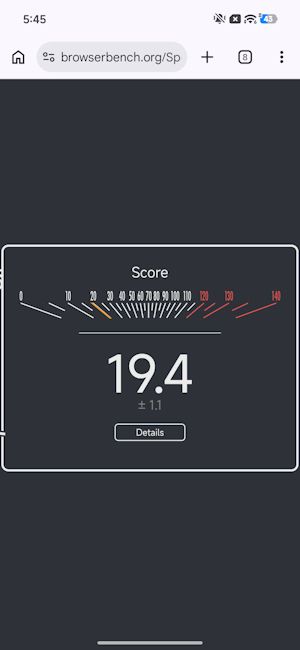
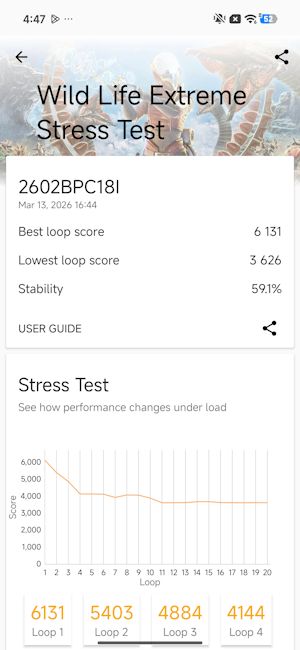
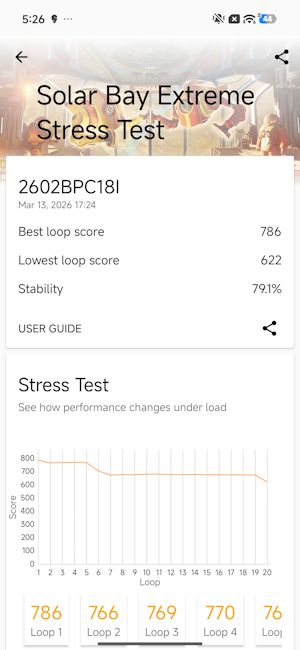
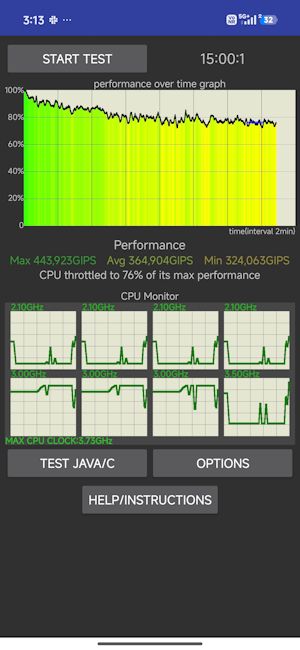
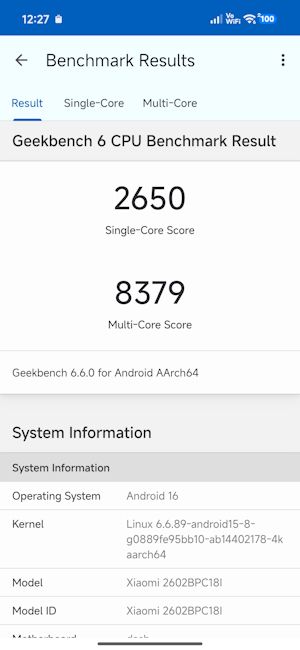
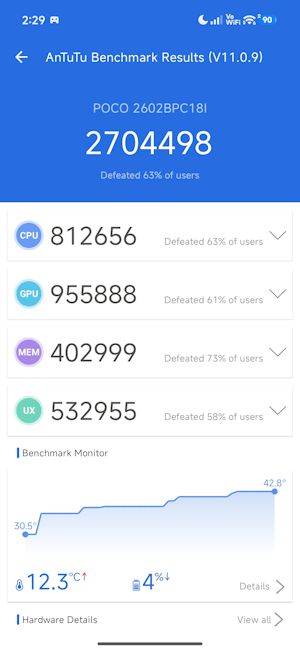
The Dimensity 9500s chipset is a great choice for gamers too and you get more than what you pay for. However, what surprised me most was that even without making use of the Ultra performance mode, the phone wouldn't throttle. The only time it did was when I was playing Wuthering Waves on the maximum settings in my warm terrace.

Indoors, despite playing CoD Mobile for about two hours, the phone barely crossed 38°C even with the Ultra performance mode turned on. It never got uncomfortably warm in the hands either.
| Game | Settings |
|---|---|
| CoD Mobile | Medium + Ultra (120 FPS stable) Max + Max (60 FPS stable) |
| BGMI | Smooth + Extreme (120 FPS) |
| Genshin Impact | Highest + 60 FPS |
| Honkai Star Rail | Very High + Very High |
| Wuthering Waves | Highest + 60 FPS (FSR enabled) |
| Rainbow Six Mobile | Ultra + 60 FPS |
Related Articles

Software and Updates
- Android 16-based HyperOS 3.0
- 4 OS Updates + 6 Security Patches
Our Poco X8 Pro Max is running on Android 16-based Hyper OS 3.0.1.0.WPLINXM build out of the box and hasn't received any updates yet. So, our findings here will be based purely on that.

As always, HyperOS is a mixed bag and while those smooth animations are satisfying to encounter, the disturbing amount of bloatware out of the box can heavily disrupt the experience. Although the bloatware can be uninstalled, it is a pain to clear them all out and clean the system before use. In case you're wondering, bloatware includes 11 pre-installed games alongside apps like Agoda, Facebook, Instagram, LinkedIn, WPS Office and more.

To make matters worse, the Indus Appstore can spam you with some annoying system ads as well, which got me to the point that I had to force stop the app (you can't uninstall it). My recommendation would be to hit "Skip" on the Indus Appstore page during setup. As for Wallpaper Carousel, you do get the option to disable it during setup as well, which is one less trouble.
Now, while the refined HyperOS 3 animations are smooth, I noticed some minor stutters in the UI when navigating my way across on a daily basis. There were also moments when basic social media apps like Instagram and WhatsApp would crash (happened a total of two times during my usage).

Some of my favourite HyperOS 3 features were the new cinematic animations, AI dynamic wallpapers and more editing options in the lockscreen. If you are like me and love customising the UI, the Poco X8 Pro will bring you great pleasure. However, in terms of overall stability of the software, I can't help but feel that HyperOS could really use some more polish and optimisation. It falls short by a big margin when compared to the likes of OxygenOS 16, ColorOS 16 and even OriginOS 6.
Related Articles

Camera Reviewed
- 50 MP Light Fusion 600 primary rear camera, 8 MP ultrawide
- 20 MP selfie shooter
- Up to 4K @ 60 FPS video recording
When the Poco X8 Pro Max impressed me with its performance a little too much, I already knew it better to lower my expectations from its cameras. There's only so much a sole 50 MP shooter can do and let's be honest, 8 MP ultrawides are just a formality at this point.

During the day, you can get some pretty good shots out of the phone and even the 2x mode of the primary sensor retains details accurately. If you take a look at the shots below, you'll notice how well the primary camera renders the fire smoke coming off a building.
Upon zooming in, you'll see that the architectural designs and textures of the buildings are all very well retained. Dynamic range is also handled very well here and the shadows and highlights are handled all too well.


Upon closer inspection, I noticed that there's a very slight colour disparity between the ultrawide and primary shooter. In fact, there's some disparity between the primary's 1x and 2x shots as well. However, it's very subtle and doesn't make anything seem overly odd. The ultrawide is certainly the weakest link here and you can see how smudged those details are upon zooming in.
Things go from bad to worse for the ultrawide at night, where the sensor can barely render textures. On top of that, if you have shaky hands, it will take a couple of tries to get a non-blurry ultrawide shot.
However, things still work in favour of the primary lens, which keeps light sources from blowing out. In certain scenarios, there's some visible ambient occlusion that bleeds into the shots, but it's very subtle. Some would argue it's aesthetic. The 50 MP sensor mostly captures details well during the evening and at night, but it can be inconsistent at times and smudges it out.


Selfies turn out good enough from the 20 MP lens at the front, but I did notice a strange white cast around the subject's silhouette in non-portrait shots. That looks rather odd and I couldn't fix it in any way. However, portrait shots don't have this problem, delivering solid results with good background mapping and edge detection. I also noticed how skin tones were slightly boosted in portrait modes and regular selfies were more natural.


Videos also come out well and while the rear main camera can record up to 4K @ 60 FPS videos, the front is limited to 1080p @ 60 FPS.
Battery Life and Charging
- 7,000mAh battery
- 100W fast charging

That massive 9,000mAh battery inside is undeniably one of the highlights of the Poco X8 Pro Max. I could easily get about two days of backup out of the phone, with a screen-on time of about 5.5 hours and a screen-off time of about 18 hours. I was terribly spaced out during this time with work and couldn't use my phone too much, which would explain the lower screen-on time.
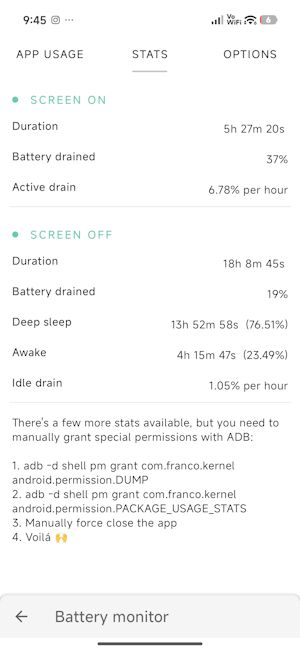
To be specific, my usage mostly included doomscrolling on Instagram and watching Young Sherlock on Amazon Prime when free, running Spotify almost all the time in the background and throwing some CoD Mobile into the mix over a span of two days.
In reality, this could roughly translate to a total screen-on time of anywhere between 8 to 12 hours, which is quite impressive. However, another thing to consider is that HyperOS 3 isn't the most battery-optimised OS out there.
Charging is quite fast too and once it was down to 6%, I could top off the Poco X8 Pro Max to 100% in about 1 hour and 30 minutes using the included 100W charger. Here's a detailed timeline as far as charging is concerned:
- 9:45 PM - 6%
- 10:40 PM - 53%
- 11:15 PM - 100%
Poco X8 Pro Max Review Verdict: Should You Buy It?
The Poco X8 Pro Max is a landmark debut for Poco's first Pro Max and it largely delivers. The premium build, stunning display, Dimensity 9500s performance and a 9,000mAh battery that genuinely lasts two days are all very impressive and at this price point, hard to argue with. However, the ultrawide camera is a letdown and HyperOS 3 still needs significant polish before it can compete with the likes of OxygenOS or ColorOS.
But here's the bottom line. If you need a phone that keeps up with your demanding lifestyle without constantly dying out, the Poco X8 Pro Max is genuinely hard to beat at Rs 42,999. The cameras won't win you any awards, but the rest of the package more than compensates. Poco's first Pro Max isn't perfect, but for what it costs, it comes dangerously close.

₹44,650 with Flipkart Axis Bank Credit Card
| Partner | Offer Applicable for | Offer Value | Final Value |
|---|---|---|---|
| Flipkart Axis Bank | Credit Card | ₹2,349 cashback | ₹44,650 |
| Flipkart SBI | Credit Card | ₹2,349 cashback | ₹44,650 |
| Flipkart Axis Bank | Debit Card | ₹750 cashback | ₹46,249 |
| Flipkart Bajaj Finserv Insta EMI | Credit Card(EMI) | ₹400 off | ₹46,599 |


