


MediaTek has officially launched the Dimensity 9600 Pro, its next-gen flagship chipset in China today. From the ‘Pro’ suffix added to its name to the 2nm manufacturing process, the new chipset marks a major milestone on many fronts for the Taiwanese firm. But how big of a jump does the Dimensity 9600 Pro make compared to last year’s MediaTek Dimensity 9500, which is still a beast in its own right? Let’s find out.
MediaTek Dimensity 9600 Pro vs Dimensity 9500: The 2nm ‘Pro’ Advantage
The Dimensity 9600 Pro chipset is a significant upgrade over last year’s Dimensity 9500. But none of the upgrades are as significant and headline-grabbing as the 2nm-process chipset.
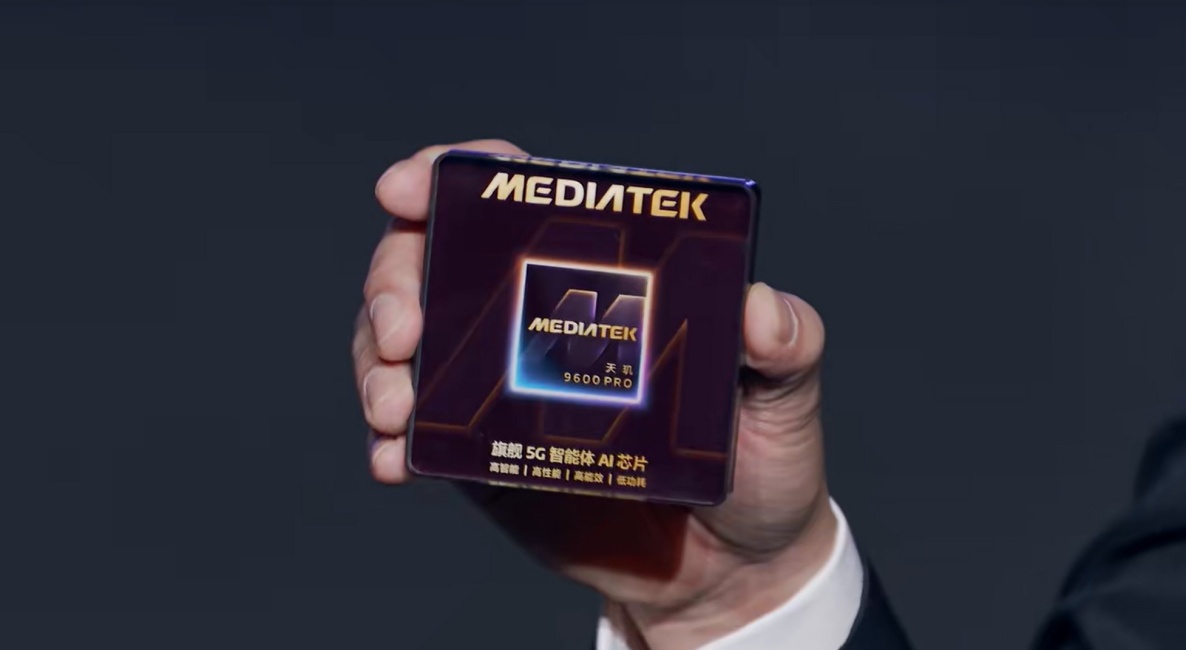
The Dimensity 9600 Pro is MediaTek’s first-ever mobile chipset built on TSMC’s second-gen 2nm N2P process. It also brings the chipset closer to Apple’s A20 Pro and Qualcomm’s upcoming Snapdragon 8 Elite Extreme Gen 6 series chipset.
On the other hand, the Dimensity 9500 is MediaTek’s older 3nm process chip. It is still a superb chip, built for gaming and high performance. That said, it's also known to have poor thermal management which holds it back, as confirmed in our MediaTek Dimensity 9500 benchmarks.
Related Articles

Dimensity 9600 Pro vs Dimensity 9500: CPU
Dimensity 9600 Pro features a 2+3+3 setup and this is the first time a MediaTek silicon packs two ultra-large prime cores. It brings Arm’s latest 2x C2-Ultra prime cores at 4.55 GHz, 3x C2-Pro performance cores at 4.35 GHz, and 3x C2-Pro efficiency cores at 3.10 GHz.
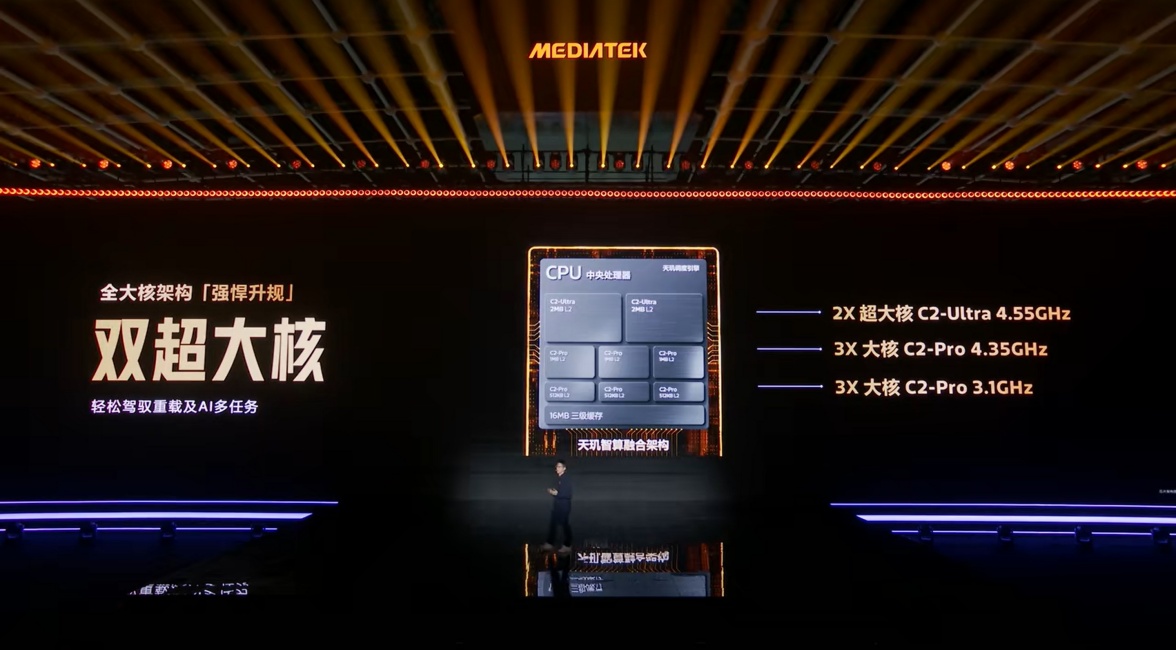
Earlier leaks had pegged Dimensity 9600 Pro’s CPU to get a maximum frequency that hovered just under 5 GHz. But the actual frequency is 4.55GHz, much lower than expected. Still, the dual ultra-core architecture is set up to deliver desktop-level performance.
In comparison, last year’s Dimensity 9500 uses a 1+3+4 CPU setup, with 1x C1-Ultra prime core at 4.21 GHz, 3x C1-Premium performance cores at 3.50 GHz, and 4x C1-Pro efficiency cores at 2.70 GHz.
MediaTek has also shared official figures for the new CPU. It says the Dimensity 9600 Pro is 17% faster in single-core and 15% faster in multi-core than the Dimensity 9500. For the Dimensity 9600 Pro, MediaTek claims a Geekbench 6 single-core score of 4,276 and a multi-core score of 12,650.
| Geekbench 6 | Dimensity 9600 Pro (Claimed) | Dimensity 9500 |
| Single-core | 4,276 | 3,315 |
| Multi-core | 12,650 | 9,914 |
On the other hand, the Dimensity 9500 saw a 3,315 score in single-core and a 9,914 score in multi-core in our own Geekbench 6 testing, much lower than what was touted by MediaTek.
MediaTek also claims efficiency gains, saying that the single-core power consumption has dropped by 37% and multi-core power consumption is reduced by 61%. On top of that, the Dimensity 9600 Pro packs 34.5MB of total cache and a 21% larger L2 cache than the Dimensity 9500.
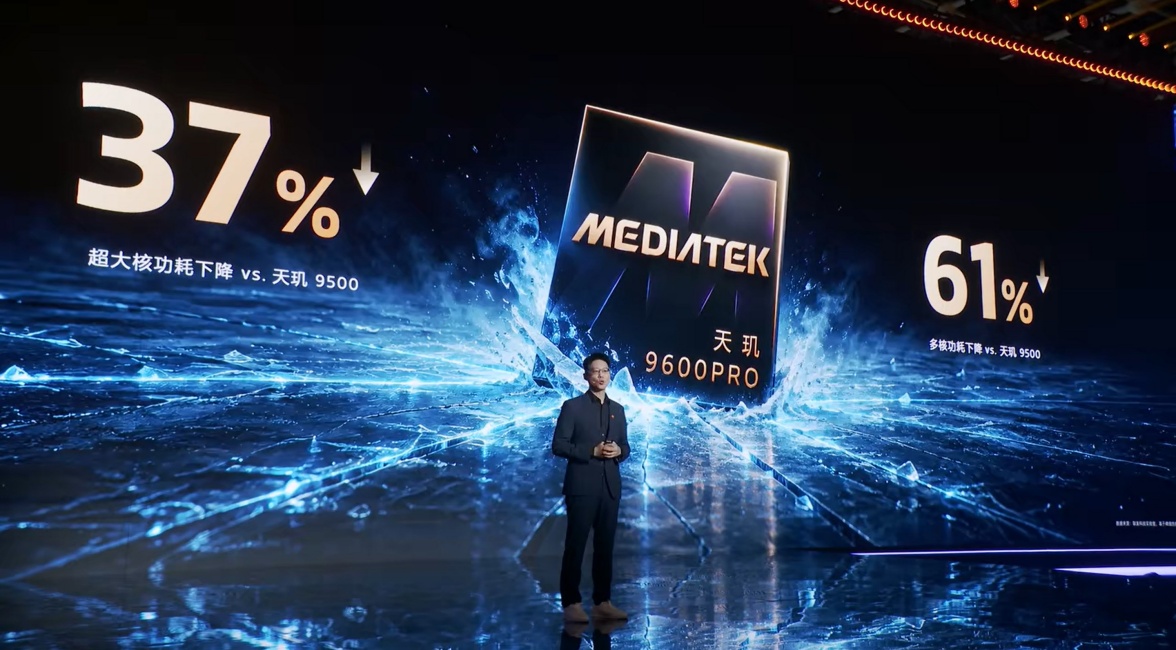
Nevertheless, the heavy lifting done by the two big prime cores on the Dimensity 9600 Pro clearly highlight the benefits of the new architecture.
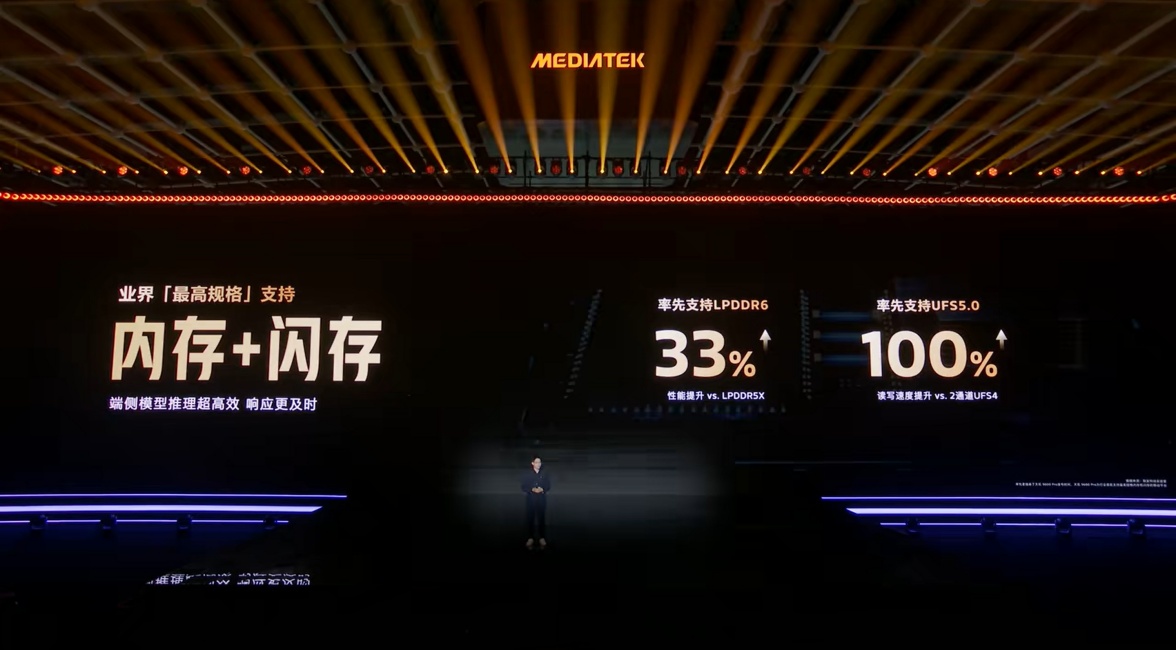
LPDDR6 memory support on the Dimensity 9600 Pro is also 33% faster than LPDDR5X on Dimensity 9500. And UFS 5.0 storage on the Dimensity 9600 Pro is 100% faster than the dual-channel UFS 4.0, as claimed by MediaTek. The Dimensity 9500 chip has UFS 4.1 (4-lane) storage support.
Related Articles

MediaTek Dimensity 9600 Pro vs Dimensity 9500: GPU
The Dimensity 9600 Pro packs the latest Arm Mali G2-Ultra NX MC12 GPU. The new Arm architecture brings AI-assisted GPU rendering, along with an upgraded HyperEngine and hardware-accelerated ray tracing.
MediaTek claims the G2-Ultra NX is 27% faster at peak performance, draws 24% less power, is 18% faster at ray tracing, and supports gaming up to 185 FPS. In comparison, the Dimensity 9500 has the Arm Mali G1 Ultra MC 12. Despite not having the AI-accelerated features, it is graphically still very capable.
Next, the Dimensity 9600 Pro's Neural Graphics Architecture links the GPU directly to the NPU. As a result, you get super-resolution upscaling and hardware-accelerated ray tracing with multi-material reflections.
As for the camera, MediaTek’s Imagiq 1290 on the Dimensity 9600 Pro supports 4K @ 240 FPS slow-motion video capture and up to 8K @ 60 FPS. The Dimensity 9500 chip has an older Imagiq 1190 ISP which supports slow-motion video capture at 4K @ 120 FPS and up to 8K @ 60 FPS.
The differences between the Dimensity 9600 Pro and the Dimensity 9500 are not only noticeable but also generational. The AI acceleration for image upscaling on the new GPU architecture and the extra FPS for 4K slow-motion video recording are likely to deliver better gaming and videography results.
Related Articles

Dimensity 9600 Pro vs Dimensity 9500: Specs Comparison
| Specification | Dimensity 9600 Pro | Dimensity 9500 |
|---|---|---|
| Process Node | TSMC 2nm (N2P) | TSMC 3nm (N3P) |
| CPU | 8-core Arm C2-Ultra CPU | 8-core Arm C1-series CPU |
| CPU Cores | 2x C2-Ultra (4.55 GHz), 3x C2-Pro (4.35 GHz), 3x C2-Pro (3.10 GHz) | 1x C1-Ultra (4.21 GHz), 3x C1-Premium (3.50 GHz), 4x C1-Pro (2.70 GHz) |
| GPU | Arm Mali G2 Ultra NX MC12 | Arm Mali-G1 Ultra MC12 |
| NPU | MediaTek NPU 1090, Super Efficient NPU 2.0 | MediaTek NPU 990 |
| ISP | Imagiq 1290, 4K240FPS slow-motion video capture, 8K60FPS video capture, 4K60 AI True Colour Tone, 4K120 with EIS, 4K60 HDR with content-aware semantic processing | Imagiq 1190, 320MP image, 4K120FPS slow-motion video capture, 8K60FPS video capture |
| Memory | LPDDR6 memory, up to 10667 Mbps | LPDDR5X memory, up to 10667 Mbps |
| Storage | UFS 5.0 | UFS 4.1 (4-lane) |
| Modem | 5G Advanced modem with support for 5CC carrier aggregation, up to 7.3 Gbps download speed | MediaTek Release 17 5G modem (Sub-6GHz only), up to 7.4 Gbps peak download speed |
| Connectivity | Wi-Fi 7 and Bluetooth 6.2 | Wi-Fi 7 and Bluetooth 6.0 |
Related Articles

MediaTek Dimensity 9600 Pro vs Dimensity 9500: Verdict
From the CPU architecture to GPU performance, the Dimensity 9600 Pro leaves the Dimensity 9500 in the dust. Even though the latter is a flagship chipset, the latest Dimensity chip marks the next-gen leap that is required for MediaTek to compete with other heavy hitters like the Apple A20 Pro chip.
MediaTek’s latest chipset fully deserves the ‘Pro’ branding, be it in terms of video capture, graphics, or AI capabilities. Between the Dimensity 9600 Pro and the Dimensity 9500, the newer 2nm-process chipset gains a massive advantage over its older cousin.
MediaTek chips also have a reputation of having poor thermals. While performance on its older chips was stymied by poor heat management, we can only hope that MediaTek has turned a corner with the Dimensity 9600 Pro. In any case, it’s hard to tell how well these claims stack up, not until we run our own benchmarks on a retail phone. So, stay tuned for our Dimensity 9600 Pro benchmark numbers.
Related Articles


