


From January 1, 2027, your messaging app will be tied to the physical SIM card or eSIM in your phone. And if the SIM is missing or inactive, the messaging app may simply stop working. The Indian government is making the rule operational for SIM binding from next year. So, if you are curious about what SIM binding really means for you, follow our in-depth explainer below.
What Is SIM Binding?
Currently, WhatsApp verifies your number only once during the setup process. You enter your number, receive an OTP for verification and that is it. After that, you can remove the SIM, put it in another phone or let it expire and your WhatsApp account will keep working over Wi-Fi without any issue.

SIM binding is changing this model. Under the Department of Telecommunication's (DoT) directions, messaging apps have to keep checking that your registered number's SIM is physically present inside the phone. If you remove the SIM or change it, the app will lock you out until the original number is back on the device.
It's similar to how UPI apps like PhonePe or Google Pay works. These apps send a silent SMS from your SIM during setup to confirm that the number belongs to the phone. Messaging apps will now need to do something similar and continuously detect the SIM card. Note that the rules will apply to eSIM as well. You can learn how to check your SIM number on Android phones.
Related Articles

Why Is the Government Enforcing SIM Binding?
The DoT's argument is that this is being done to stop scams and online frauds. Scammers buy Indian SIM cards, register WhatsApp or Telegram accounts on them and then operate those accounts from outside the country. It works long after the SIM has been thrown away or deactivated.
This mechanism allows them to run digital arrest scams, impersonation calls and investment frauds using Indian numbers. Worst of all, authorities can't trace back the SIM to the actual scammer. The government says Indians lost more than Rs 22,800 crore to cyber fraud in 2024 and SIM binding is a response to that problem.
To bring messaging apps under this rule, the government first amended the Telecom Cyber Security Rules in 2025. And created a new category called Telecommunication Identifier User Entity (TIUE). This label covers those apps which use mobile numbers to identify users like WhatsApp and Telegram.
Related Articles

SIM Binding Timeline: What Has Happened So Far
SIM binding has been in the works for almost a year with some major developments. Here is how we got here.
- October 2025: The Telecommunications (Telecom Cyber Security) Amendment Rules, 2025 come into effect. It introduced the TIUE category for apps that identify users with mobile numbers.
- November 2025: The DoT issues SIM binding directions to eight apps including WhatsApp, Telegram, Signal, Snapchat, Arattai, ShareChat, JioChat and Josh. The apps get 90 days to implement SIM binding and 120 days to submit a compliance report. The directions also require web versions like WhatsApp Web to log out users every six hours. On the same day, the DoT separately asks phone makers to pre-install the Sanchar Saathi app.
- December 2025: The government makes the SIM binding directions public through an official release. The Cellular Operators Association of India (COAI), which includes Jio, Airtel and Vi, welcomes the move and calls it an important step for national security.
- December 2025: After a massive backlash over privacy, the government withdraws the order to pre-install the Sanchar Saathi app on smartphones. That said, SIM binding remained in place.
- December 2025: The Internet and Mobile Association of India (IAMAI) writes to the Communications Minister and argues that OTT messaging apps fall under the IT Act and not the Telecommunications Act. The Internet Freedom Foundation (IFF) asks the DoT to recall the directions altogether.
- February 2026: The Broadband India Forum (BIF), whose members include Meta and Google, sends the DoT Secretary a legal opinion. It calls the SIM binding rules unconstitutional.
- February 2026: Early SIM binding code in the WhatsApp beta for Android is spotted. It's limited to numbers with the +91 country code.
- February 2026: The 90-day deadline passes without enforcement.
- March 2026: Reports reveal that the DoT is considering an extension. Android is expected to comply soon, but iOS will need more time.
- April 2026: The government drops the six-hour WhatsApp Web logout rule and says web sessions will now be logged out only when they look risky. In addition, the SIM binding deadline moves to December 31, 2026.
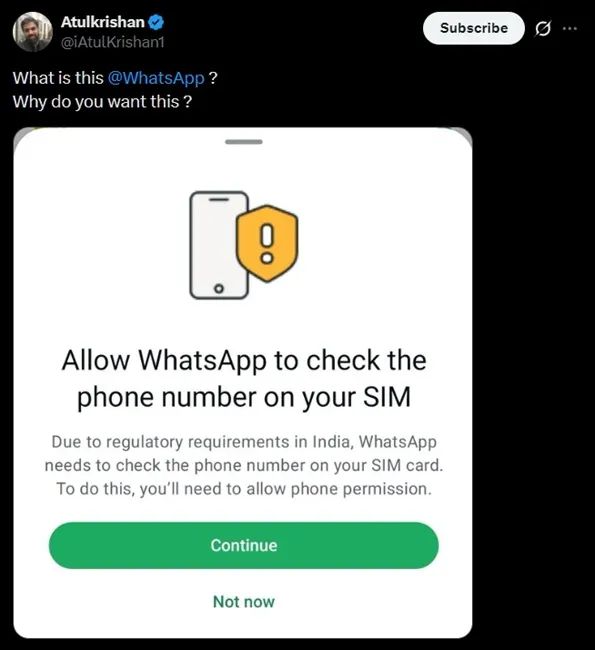
- April 2026: A user on X shares a screenshot of WhatsApp prompting users to verify their SIM card. Meta is testing SIM binding with regular users in India.
- May 2026: ShareChat and Arattai confirm they have rolled out features to comply with the new rules.
- September 2026: Apple reportedly releases an iOS update that can detect when an iPhone does not have a SIM card. It would let messaging apps enforce SIM binding on iPhones.
- October 2026: Reports confirm SIM binding will be operational from January 1, 2027. It also says say Snapchat has been left out of the rules while Signal has gone silent on the government's notices. You can read our quick guide on what WhatsApp SIM binding means for you.
Related Articles

Which Apps Will Require SIM Binding?
The DoT's original directions included eight apps: WhatsApp, Telegram, Signal, Snapchat, Arattai, ShareChat, JioChat and Josh. However, the list has changed now.
WhatsApp is already testing SIM verification on Android. ShareChat and Arattai have confirmed compliance. Telegram has not said much publicly, but it's expected to comply given its large user base in India.
Snapchat is where things get a bit confusing. New reports claim that Snapchat doesn't have to implement SIM binding, but the government's official release from 2025 names it. Signal, on the other hand, has reportedly not responded to government notices at all, so it's unclear what will happen to the Signal app in India after January 1.
Related Articles

How Will SIM Binding Affect You?
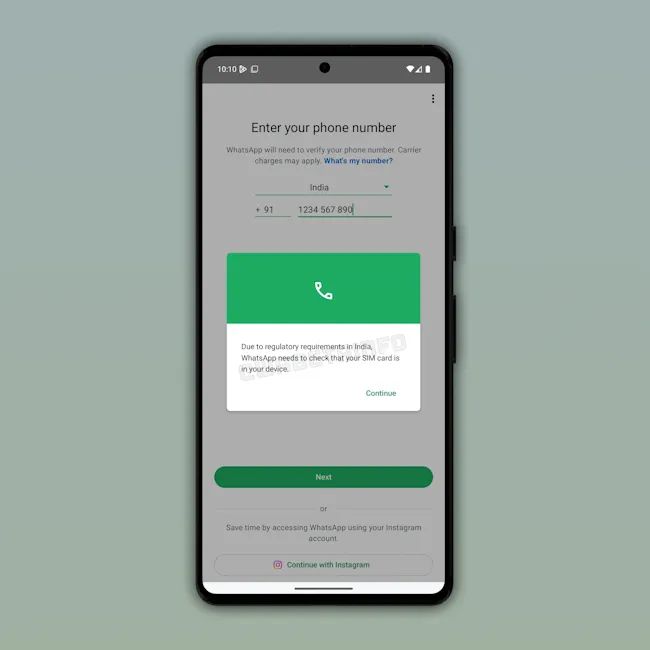
If you use WhatsApp with a SIM inside your phone, nothing much will change. At most, you will see a one-time prompt asking for phone permission so that the app can check your SIM.
The problem starts if you use WhatsApp on a second phone and keep your SIM in a different phone. And if you own a tablet or a Wi-Fi-only device, you will face the same issue. The app may stop working until the SIM is back in that device. And WhatsApp has not yet said how linked devices will be handled.
As for WhatsApp Web and desktop apps, the six-hour forced logout is gone and only suspicious sessions should be logged out now. iPhone users will have to wait and see how WhatsApp implements SIM detection on iOS.
Related Articles

What Should You Do Before January 1, 2027?
If you want to avoid any issues, here are a few simple steps you can take right now.
- Make sure the SIM linked to your WhatsApp and Telegram is in the same phone where you use these apps.
- Keep your SIM active and recharged. If the number gets deactivated for non-payment, your messaging account could stop working too.
- If you travel often, consider moving your Indian number to an eSIM so that you can keep it active along with a local SIM abroad.
- If you use WhatsApp on a second phone or tablet, move it to linked device mode from your primary phone instead of registering it separately.
- Check whether there are any SIM cards issued in your name that you don't recognise. Here is our guide on how to find out if someone is using a SIM card in your name.
We will update this article as WhatsApp, Telegram and the DoT share more details on how SIM binding will work in practice ahead of the January 1 deadline.


