


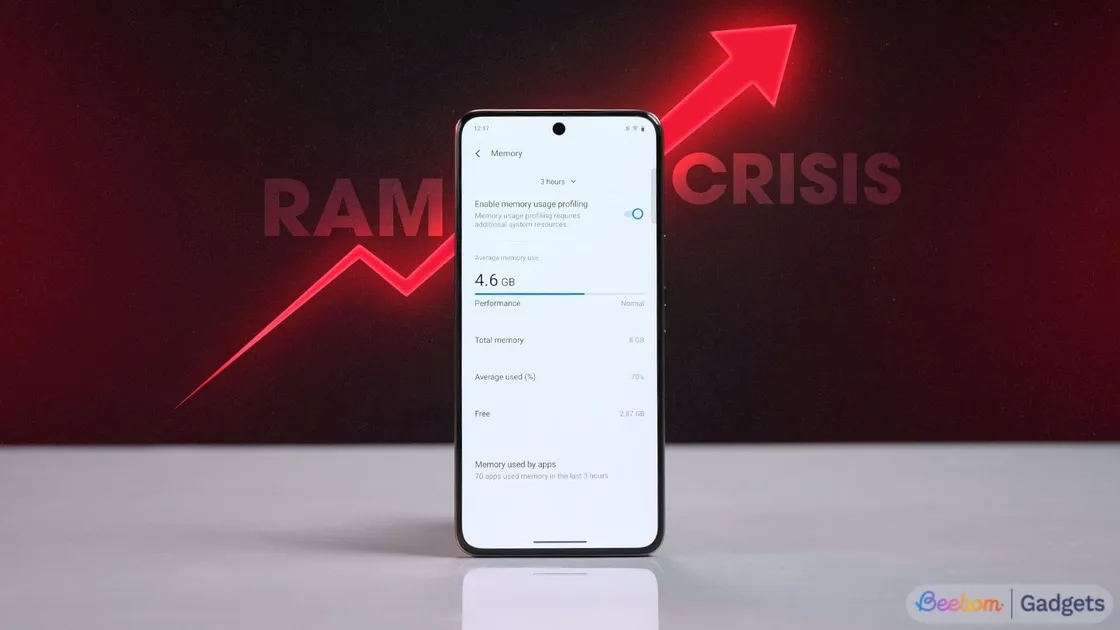

The last few months have been incredibly jarring for both manufacturers and consumers alike, with memory prices touching new highs. According to the latest reports, the memory market has officially entered a Hyper-Bull cycle, driven by earth-shattering demand for AI infrastructure. New reports suggest a further price hike in the first quarter of 2026.
RAM prices are not slowing down anytime soon
According to recent data from Counterpoint Research, memory prices surged nearly 50% in the last quarter of 2025, with a further 40-50% hike expected in Q1 2026. The prices are being pushed past the historic peaks we've seen in 2018, and continue to rise, posing challenges to both brands and consumers.

The report suggests that the cost of server-grade memory illustrates the severity of the RAM crisis, as a 64 GB RDIMM module, which costs $255 (approximately Rs 23,000) now, costs $450 (approximately Rs 35,000), and could soon breach the $1,000 (approximately Rs 90,000) mark later this year. This is double the price per gigabit that was seen during the 2018 peak.
The rise in RAM costs is changing hardware economics, with brands increasing the cost of smartphones. Recent examples include the Nothing Phone (3a) Lite price bump. Counterpoint research suggests memory now accounts for over 10% of the iPhone 17 Pro Max bill of materials, and for future flagships with more RAM capacity, this could go to over 20%.

Making the issue more severe are major suppliers like SK Hynix and Samsung hiking RAM prices, which are diverting production capacity to high-margin server DDR5 chips. This is rapidly affecting consumer RAM, both DDR and low-power DDR RAM found in PCs and smartphones. Even the legacy DDR4 and LPDDR4 RAM prices have shot up to abnormal levels in the last few months.
This introduces a major hurdle in the consumer electronics market, leaving it in an extremely difficult position. While capital expenditure is increasing to boost production, market experts predict that supply chain relief is unlikely to arrive soon.
Related Articles


