





Google's new Pixel 11 Pro Fold and Samsung's Galaxy Z Fold 8 Ultra represent the most expensive, most capable foldables that each company makes. But which one is better? Let's find out in this Pixel 11 Pro Fold vs Galaxy Z Fold 8 Ultra comparison, where we put the two phones against each other to see which one comes out on top in a spec-by-spec breakdown.
Pixel 11 Pro Fold vs Galaxy Z Fold 8 Ultra: Design
- The Pixel 11 Pro Fold is 10% lighter and 1 mm thinner than the Pixel 10 Pro Fold
- It carries an IP68 rating, which adds dust-tight sealing, against the Z Fold 8 Ultra's IP48
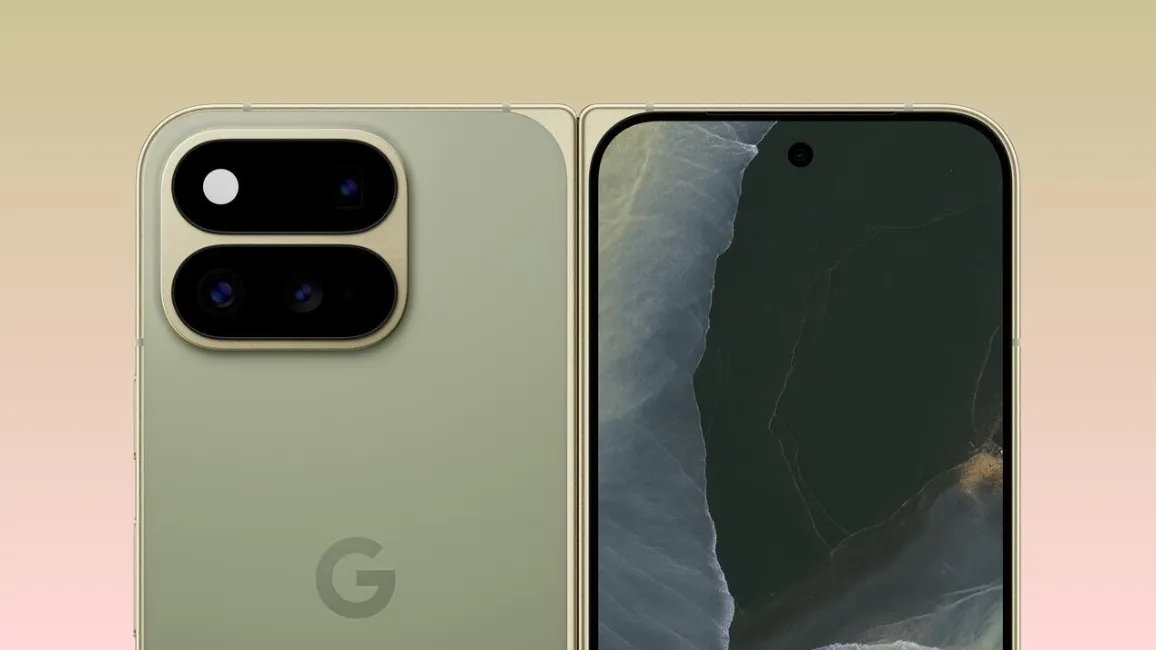
- Pixel 11 Pro Fold adds a new HiLight LED that sits on the camera housing
The Pixel 11 Pro Fold keeps the same wider, shorter proportions as the Pixel 9 Pro Fold and the Pixel 10 Pro Fold that followed. But Google has trimmed the weight down to 239 grams. It is also a millimetre thinner than its predecessor, at 10.1 mm folded and 5 mm unfolded, with Google claiming the slimmest bezels of any foldable right now.

On the Samsung side, the Galaxy Z Fold 8 Ultra sticks to the tall, traditional Fold shape like its predecessor, the Galaxy Z Fold 7. But it is comparatively lighter, weighing 215 grams and measuring just 4.1mm open. Plus, it has an all-Armour Aluminium build.

It's a genuinely different design philosophy, with Samsung going for a thin and narrow look, while Google keeps pushing the wider, more book-like form factor it's stuck with since the very first Pixel Fold. The good thing is Samsung also has the new Galaxy Z Fold 8 for those who want a wider folding phone.

The Google Pixel 11 Pro Fold comes with a soft-to-the-touch composite back, scratch-resistant glass, and an all-new durable hinge, along with an IP68 rating, which provides full protection against water and dust. On the other hand, the Z Fold 8 Ultra is only IP48 rated. It might survive a water drop, but small grains of dust may get stuck in the phone.

Google also introduces the new HiLight LED (previously rumoured as Pixel Glow) on the 11 Pro Fold's camera bump. It is a small light near the camera housing that glows when you activate Gemini or when an important notification comes in.
Related Articles

Pixel 11 Pro Fold vs Galaxy Z Fold 8 Ultra: Display
- The Pixel 11 Pro Fold keeps its 8-inch inner and 6.4-inch outer display sizes from the 10 Pro Fold
- The Galaxy Z Fold 8 Ultra also features an 8-inch inner and a 6.5-inch cover screen. 5
- The Pixel can get brighter this time with 3,600 nits peak brightness over Samsung's 3,000 nits
Google isn't touching screen sizes this generation, as the display dimensions are the same as that of the Pixel 10 Pro Fold. The Pixel 11 Pro Fold carries an 8-inch Super Actua Flex OLED display with 2076 x 2152 resolution and a 120 Hz refresh rate. On the outside, it has a 6.5-inch 1080p 120 Hz LTPO OLED screen.

What's actually new is brightness. Both inner and outer screens on the Pixel 11 Pro Fold can go up to 3,600 nits peak brightness, which should offer better outdoor visibility.
On the other side, the Z Fold 8 Ultra's 8-inch inner display peaks at 3,000 nits, but Samsung's actual pitch this year is about the crease, not brightness. The Flex Titanium hinge is built specifically to keep the crease to a minimum.

It also features an OLED screen with a 120Hz refresh rate across its inner and cover displays, so day-to-day smoothness should feel comparable regardless of which one you pick. The good thing is that both the Pixel 11 Pro Fold and the Galaxy Z Fold 8 Ultra come with a friction hinge so you can fold them at different angles, which is something I didn't like on Galaxy Z Fold 8.
Related Articles

Pixel 11 Pro Fold vs Galaxy Z Fold 8 Ultra: Hardware
- The Pixel 11 Pro Fold runs Google's new Tensor G6 chipset with Titan M3 security co-processor
- Samsung Galaxy Z Fold 8 Ultra runs the Snapdragon 8 Elite Gen 5 for Galaxy
- RAM starts higher on the Pixel at 16 GB against 12 GB on the Samsung, both starting at 256GB storage
This is less a raw power contest than a philosophy difference. The Z Fold 8 Ultra's Snapdragon 8 Elite Gen 5 for Galaxy processor is genuine flagship hardware built for sustained performance under heavy load and can easily tackle games with intense graphics at a smooth frame rate or heavy multitasking or editing.

Google's Tensor G6 chipset has never been about winning benchmark charts. It's built around running Gemini Intelligence and Google's on-device AI models efficiently, at the cost of the outright horsepower Qualcomm's silicon tends to offer. But it should be more efficient since it is based on TSMC's 2nm node.
The Pixel 11 Pro Fold takes the lead with 16 GB of RAM against the Z Fold 8 Ultra's 12 GB, with both phones starting at 256 GB of base storage. The extra RAM headroom should offer more room for split-screen work that these devices are built around and more AI features on the Pixel.
Related Articles

Pixel 11 Pro Fold vs Galaxy Z Fold 8 Ultra: Software
- Android 17 comes out of the box on the Pixel 11 Pro Fold with 7 years of software update promise
- The Galaxy Z Fold 8 Ultra also features One UI 9 based on Android 17 with the same update cycle
- Both phones support new Gemini Intelligence capabilities along with their own AI suite of features
The Pixel 11 Pro Fold runs close to stock Android 17, while the Z Fold 8 Ultra runs One UI 9, Samsung's considerably more customised skin with more features layered on top.
But the Pixel benefits this year with one of the new Android 17 features called App Bubbles, which allows users to open any app on the phone as a floating window. Combined with split-screen, you can have two full apps open alongside up to five bubbles, unlocking a total of 7 apps at once on your screen.

Samsung already had this feature along with drag-and-drop between split-screen apps and app pairs pinned to the edge panels. One UI 9 lets you open 3 apps side by side in split-view mode and launch additional floating windows, turning the phone into a productivity powerhouse.
Plus, there are new One UI 9 AI features, like Now Nudge, which analyses the content on your screen and opens a relevant shortcut for you. Both phones also support Gemini Intelligence features, but Pixel will get them first, and other AI additions on Pixel 11 devices like Rambler for Gboard, Magic Capture, Video Boost, Live translation and more.

Update policy is one area where the two are now evenly matched. Both companies commit to 7 years of OS and security updates on their flagship foldables.
Related Articles

Pixel 11 Pro Fold vs Galaxy Z Fold 8 Ultra: Camera
- The Z Fold 8 Ultra's 200 MP main sensor dwarfs the Pixel 11 Pro Fold's 48 MP main camera
- The Pixel 11 Pro Fold features a 10.5 MP ultrawide and 10.8 MP 5x telephoto lens
- The Z Fold 8 Ultra gets a more capable 50 MP ultrawide with a 10 MP 3x telephoto camera system
On paper, the Z Fold 8 Ultra's 200 MP main camera should offer better image quality than the Pixel 11 Pro Fold's 48 MP main shooter. But Google is using a new 1/1.56" image sensor this year, which the company claims offers a 56% jump in light sensitivity and a wider aperture than the standard sensor.
The Pixel 11 Pro Fold's 10.5 MP ultrawide and 10.8 MP telephoto with 5x optical zoom are not new. They're the same sensors Google used on the Pixel 10 Pro Fold, carried over without a single change.

The Galaxy Z Fold 8 Ultra goes the other way. It introduces a new 50 MP ultrawide camera, which should offer sharper wide-angle photos, along with a 10 MP 3x telephoto carried over from older generations. In zoom shots, Pixel should win, but for ultrawides, Samsung is better.
For selfies, both phones run identical 10 MP sensors across their cover and inner displays, so neither has an edge for video calls or cover-screen selfies specifically.
Related Articles

Pixel 11 Pro Fold vs Galaxy Z Fold 8 Ultra: Battery and Charging
- Galaxy Z Fold 8 Ultra packs a larger 5,000mAh battery against the Pixel 11 Pro Fold's 4,800mAh
- Samsung's new 45W wired charging also outpaces the Pixel 11 Pro Fold's 30W
- Pixel 11 Pro Fold supports Qi2.2 wireless charging at 25W, with PixelSnap making a return
On raw capacity, Samsung has the edge. The Z Fold 8 Ultra's 5,000mAh silicon-carbon battery is larger than the Pixel 11 Pro Fold's 4,750mAh. It is less than the base Pixel 11's capacity of 4,895mAh. As a result, Samsung might offer an hour or so of more battery life, which could be crucial in everyday use.

The Z Fold 8 Ultra also charges faster with the new 45W wired charging over the Pixel 11 Pro Fold, which is still lagging at 30W. Where the Pixel 11 Pro Fold does pull ahead is Qi2.2 wireless charging at 25W, the same as the iPhone 17 and the iPhone 17 Pro devices. The Fold 8 Ultra only supports 20W wireless charging.
Pixel 11 Pro Fold vs Galaxy Z Fold 8 Ultra: Which Phone Should You Buy?
Before heading over to the verdict, let us take a quick look at the key specifications of both phones again.
| Specification | Google Pixel 11 Pro Fold | Samsung Galaxy Z Fold 8 Ultra |
|---|---|---|
| Display | 8-inch inner, 6.5-inch cover, up to 3,600 nits | 8-inch inner, 6.5-inch cover, up to 3,000 nits |
| Processor | Tensor G6 with Titan M3 | Snapdragon 8 Elite Gen 5 for Galaxy |
| RAM and Storage | 16 GB / 256 GB (up to 512 GB) | 12 GB / 256 GB (up to 1 TB) |
| Rear Cameras | 48 MP Main + 10.5 MP Ultrawide + 10.8 MP Telephoto (5x) | 200 MP Main + 50 MP Ultrawide + 10 MP Telephoto (3x) |
| Selfie Cameras | 10 MP (Cover) + 10 MP (Inner) | 10 MP (Cover) + 10 MP (Inner) |
| Battery | 4,750mAh | 5,000mAh |
| Charging | 30W wired, 25W Qi2.2 wireless | 45W wired, 20W wireless |
| Durability | IP68 rating | IP48 rating |
| Software | Android 17 | One UI 9 based on Android 17 |
| Starting Price | Rs 1,89,999 | Rs 1,99,999 |
From the specs and design, it is evidently clear that neither of the two foldables offers a major jump over their predecessors. But if we look solely at specs, then the Galaxy Z Fold 8 Ultra triumphs over the Pixel 11 Pro Fold.

It delivers better raw performance, bigger battery capacity, faster charging speeds (wired) and a sensible camera setup than the Pixel on paper, at least. It also matches Google's 7 years of software promise and supports the upcoming Gemini Intelligence integration as well.
With Pixel, you get more RAM out of the gate, a brighter display, proper dust resistance with IP68, a bunch of AI features close to the stock Android experience and faster updates. It is also going to be Rs 13,000 cheaper than Samsung's base model. Still, the Z Fold 8 Ultra is a better pick of the two.


