


Xiaomi has announced the beta rollout schedule of HyperOS 4 for its eligible devices. HyperOS 4 will be based on Android 17, offering visual overhauls and performance improvements across Xiaomi smartphones and tablets.
HyperOS 4 Beta Rollout Begins Soon
The latest development comes from Xiaomi President Lu Weibing, who shared on Weibo all the new features coming to HyperOS 4. Besides, Lu also shared a list of Xiaomi phones and tablets eligible for HyperOS 4 Beta. This prominently includes the Xiaomi 17, Redmi K90 series and Xiaomi Pad 8 series. Here's a list of all the eligible devices and their release timelines.

| Beta Rollout Timeline | Supported Devices |
|---|---|
| August 14, 2026 | Xiaomi 17, 17 Pro, 17 Pro Max, Xiaomi 17 Ultra, Redmi K90 Pro, K90 Pro Max, Xiaomi Pad 8, Xiaomi Pad 8 Pro |
| August 27, 2026 | Xiaomi 17 Max, Xiaomi 17T series, Xiaomi 15 series, Redmi K90 Max, K90 Ultra, Redmi K Pad 2 |
| September 9, 2026 | Xiaomi Pad 7S Pro 12.5, Xiaomi Pad 17 Ultra, Redmi K100 series, Redmi K80 series, Xiaomi Mix Flip 2 |
While the brand hasn't released an exhaustive changelog yet, one of the primary highlights of this update will be the new Glass Effect UI. It draws inspiration from Apple's Liquid Glass design, providing users with a more modern and elegant feel.

The changes will apply to the home screen and lock screen. Besides, there's a new Quick Settings layout that promises a faster and more convenient way to toggle device features.
Besides, Xiaomi is integrating AI features into its Recorder, Keyboard and Voice Notes apps, bringing features like Smart outline and AI summaries, a structured speech-to-text input like Google's latest Rambler feature and image support in notes.
The post also reveals that users can expect a variety of underlying optimisations native to Android 17. Xiaomi claims that the system apps will be more efficient, the overall UI will be 17.5% more responsive and run with a 28.9% lower frame drop rate.
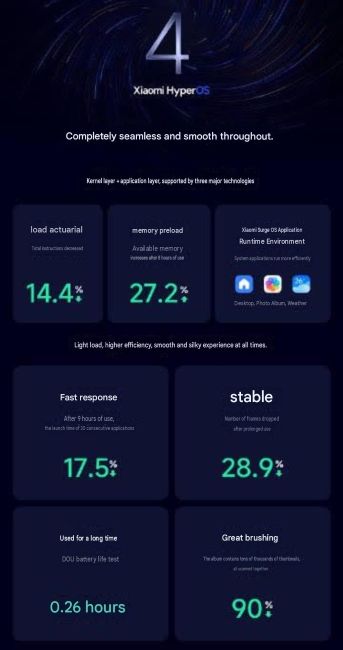
Besides, the overall battery life may improve alongside thumbnail load speeds. Lastly, Xiaomi is also bringing new changes to its HyperIsland, allowing users to drag and drop to save stuff onto the island.
For a broader look at the brand's software roadmap, be sure to check out the complete list of HyperOS 4-eligible devices. Considering all goes according to plan, the stable HyperOS 4 based on Android 17 could roll out by the end of 2026. Meanwhile, Xiaomi recently rolled out Android 17 stable to Xiaomi 17 and 17 Ultra based on HyperOS 3.
Related Articles


