





2026 has been off to a rocky start with electronic components like smartphones, storage and RAM getting incredibly expensive. With the RAM crisis in full swing, smartphone OEMs, especially on the Android side, have been struggling to manage costs and in turn, consumers are paying a steep price. That is why, as per Counterpoint, the era of value-for-money phones is reaching its end very soon.
"Affordable Smartphones" could soon become a thing of the past
A new Counterpoint Research report has revealed a strategic analysis of the impact of rising RAM prices and components on smartphones. It takes Q1 2026 data into account to comment on and predict the smartphone market in 2026.
Based on that, it has been noted that the BoM (Bill of Materials) makeup of entry-level and budget smartphones now accounts for almost 43% to memory. This means that smartphones costing under Rs 30,000 in India now account for 43% of its final MSP to RAM only.
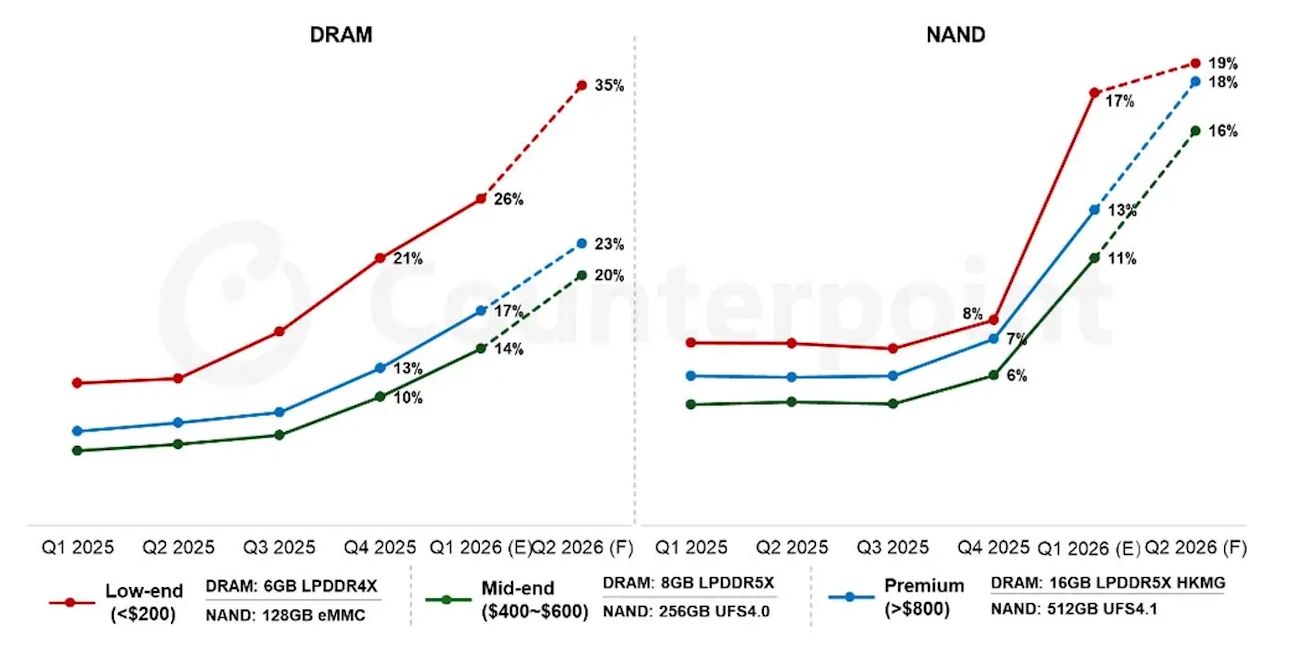
This paints a very grim picture since almost 60% of the current smartphone market in regions like India is made up of smartphones within the affordability margin. With DRAM prices increasing by 50% and NAND Flash prices up by as much as 90% in just months, 2026 might be the end of value phones.
For the longest time, "value" was driven by OEMs providing competitive specs at a mass accessible price point. Now, the narrative has shifted. With brands like Oppo, Realme, Vivo, iQOO, Samsung and more struggling to manage costs, Counterpoint says that the budget segment will see miminum $30 (approximately Rs 3,000) increase in price for the same set of specifications as that of 2025.
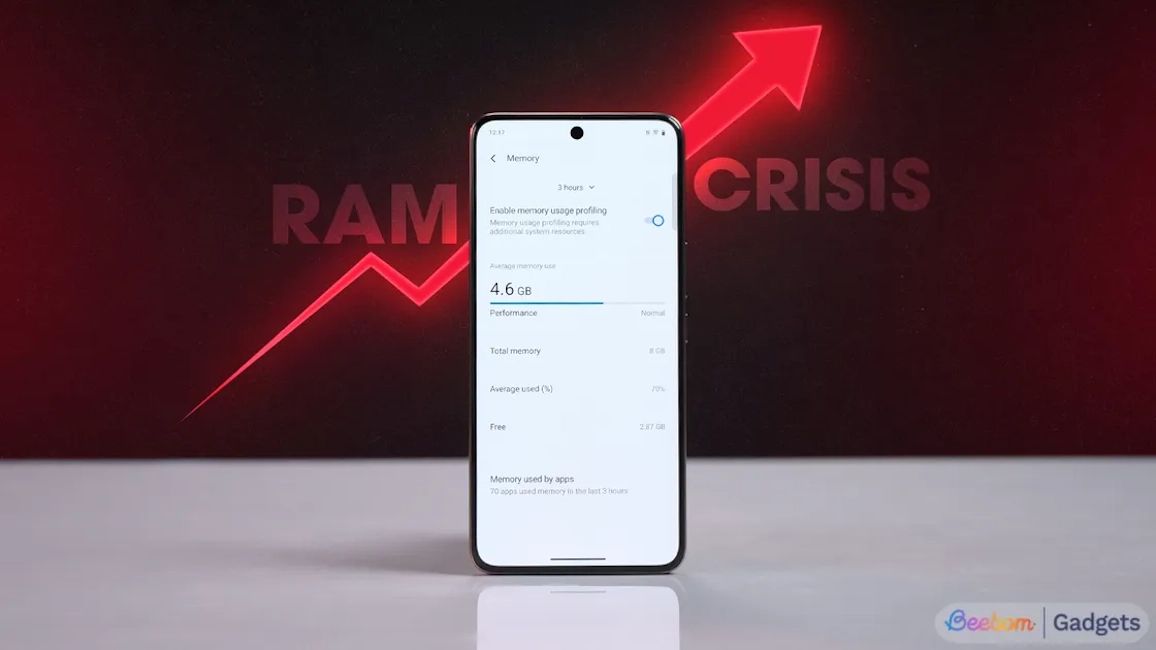
We have already seen this happen, particularly in India were the budget and mid-range segment is the most in-demand and competitive space for brands and consumers alike. The report shows a minimum 25% Quarter on Quarter (QoQ) rise in cost for phones costing below $200 (approximately Rs 20,000) and shipping with as dated as LPDDR4x RAM and eMMC storage.
For phones below $600 (approximately Rs 60,000), based on the RAM and storage variation, they can cost as much as 14% of the BOM. For instance, phones with LPDDR5x RAM and UFS 4.0 storage could climb to as much as $550 (approximately Rs 51,000) from $480 (approximately Rs 45,000). This disparity is set to climb up to 20% in Q2 2026.
Out of all, the most affected territory is said to be the premium and flagship category, ranging from $800 (approximately Rs 74,000) and above. It is expected to face double the pressure due to the acquisition cost of high-end components by OEMs. For an 8 GB LPDDR5X + 256 GB UFS 4.0 configuration, the BOM share for DRAM and NAND will rise to 14% and 11%, respectively, in Q1 2026. These figures are expected to climb to 20% and 16% by Q2 2026.
All in all, in the current market scenerio, none of the price segments are expected to receive any respite. From the sub Rs 10,000 category to the uber-premium Rs 1 lakh and above costing phones, 2026 is the year of price hikes. The biggest problem with this is that brands are shifting the entire burden to the consumers and even though the same phone now costs as much as double, the purchasing power of people remains the same.
Related Articles


