





Samsung has started teasing the Exynos 2600 processor for the upcoming Galaxy S26 series. While most of its details are still under wraps, it is said to be one of the most advanced Exynos chipsets in recent years. Now, we also know that it will sport an advanced cooling system thanks to the all-new Heat Pass Block cooling technology.
Samsung Heat Pass Block could keep the Exynos 2600 cool
As per South Korean media ET News, Samsung on November 11, 2025, showcased its new Heat Pass Block or HPB cooling tech to the media. This new technology makes use of a passive copper heatsink to dissipate the heat generated from the chipset. However, the biggest advancement here is that the HPB is directly integrated within the SoC.
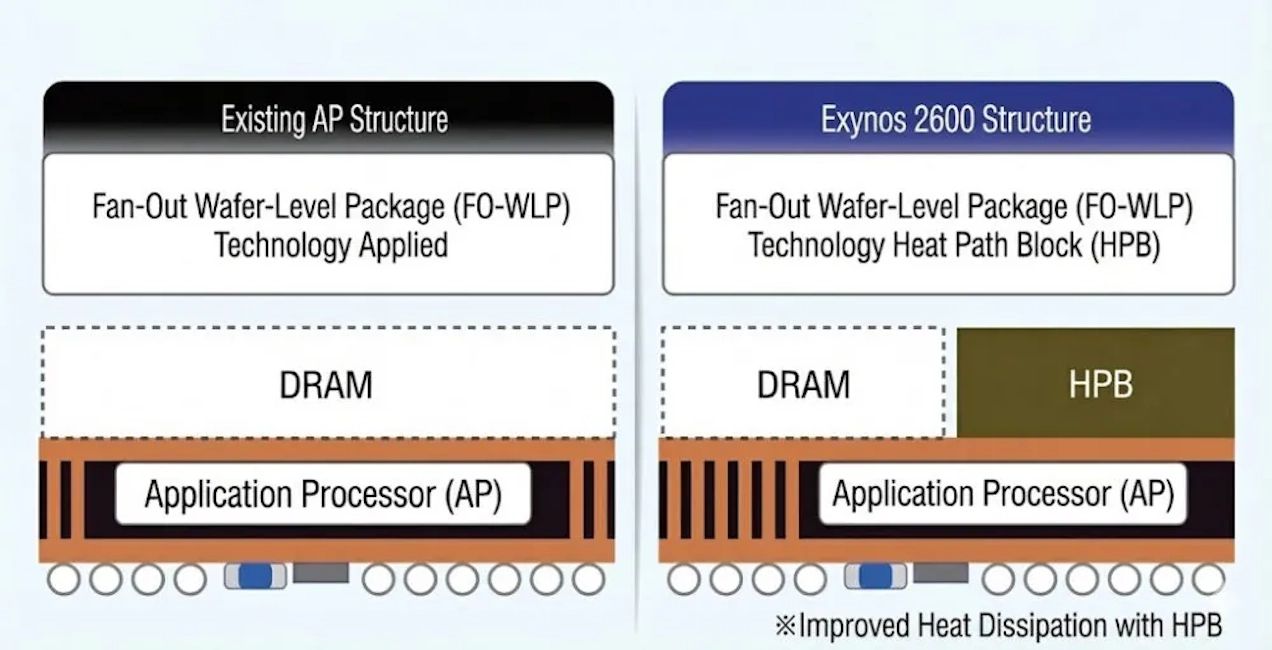
Moreover, the first mobile SoC to bear the HPB tech is the Exynos 2600 flagship chipset. It is also the first time this tech is being used inside a smartphone. Usually, passive radiators are used in PCs and Servers. Samsung has confirmed to the publication that with HPB, Exynos 2600's thermal efficiency has improved by 30% compared to the last-gen SoC.
This brings a major leap in smartphone cooling in general and for Exynos processors in particular. For the longest time, one of the major gripes that Samsung has faced with Exynos chips is poorly managed thermal throttling.
Now, with HPB, the brand will not only solve this issue once and for all, but will also entice Qualcomm, Apple and MediaTek to adopt this new tech. ET News has confirmed that Samsung is opening its doors to outside vendors who will be able to make use of Samsung Foundry to make use of its proprietary heating tech for their processors.
So, in case that happens, there will be two primary effects that the semiconductor market will witness. First is the end of TSMC's dominance. Qualcomm, MediaTek and Apple exclusively use TSMC Foundry for their flagship processors like the Snapdragon 8 Elite Gen 5, Apple A19 and A19 Pro and Dimensity 9500. With Heat Pass Block, the narrative could shift.
Also, if at all the major semiconductor players decide to use HPB for their processors, it will mark the end of thermal throttling for every chipset in the world. However, this move could also drive up Faber architecture costs. So, while consumers will enjoy lag-free and overheating-free smartphones, they will need to pay more. With the chipset crisis in full swing, this move could add up to the end user cost significantly.
Related Articles


