


Apple took the wraps off the A20 Pro chipset at its "Surprise and Shine" event on September 9, which is the first iPhone chip built on TSMC's 2nm (N2) process node. The processor powers the iPhone 18 Pro, iPhone 18 Pro Max and Apple's first foldable, the iPhone Duo. The A20 Pro chipset is the noteworthy upgrade across this year's lineup.
A20 Pro Gets a Bigger GPU and New Chip Packaging
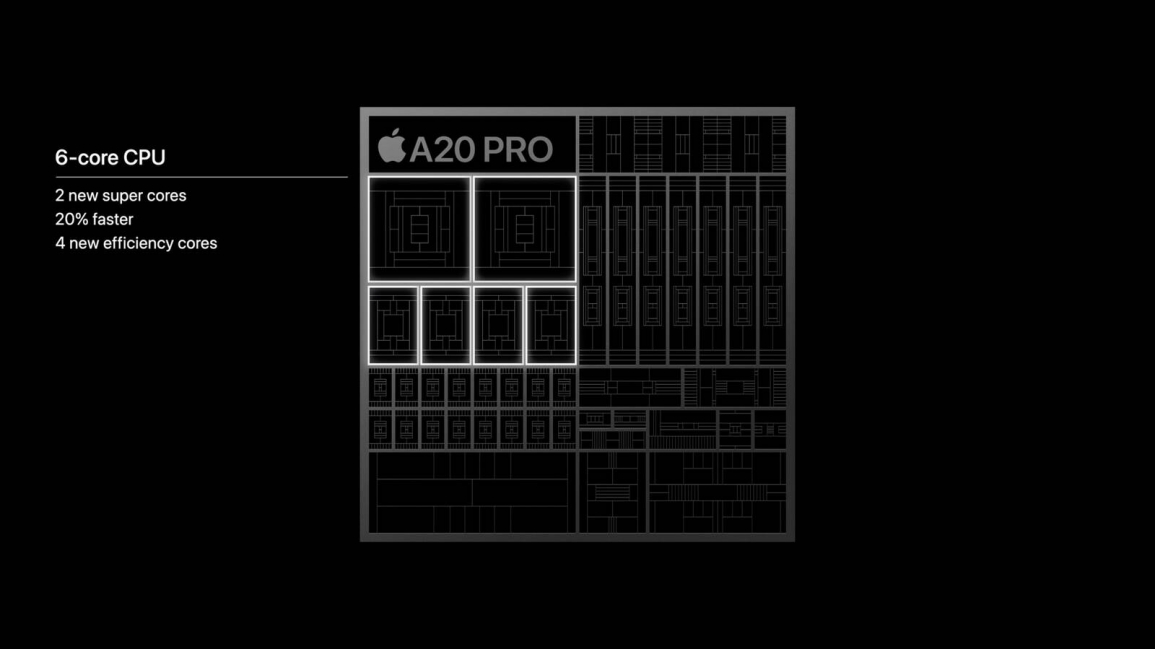
The A20 Pro keeps a 6-core CPU with the same 2+4 split as the A19 Pro chipset, but there are two new super cores and four efficiency cores. The super cores are 20% faster and Apple says it's "desktop class" and "the fastest in any smartphone".
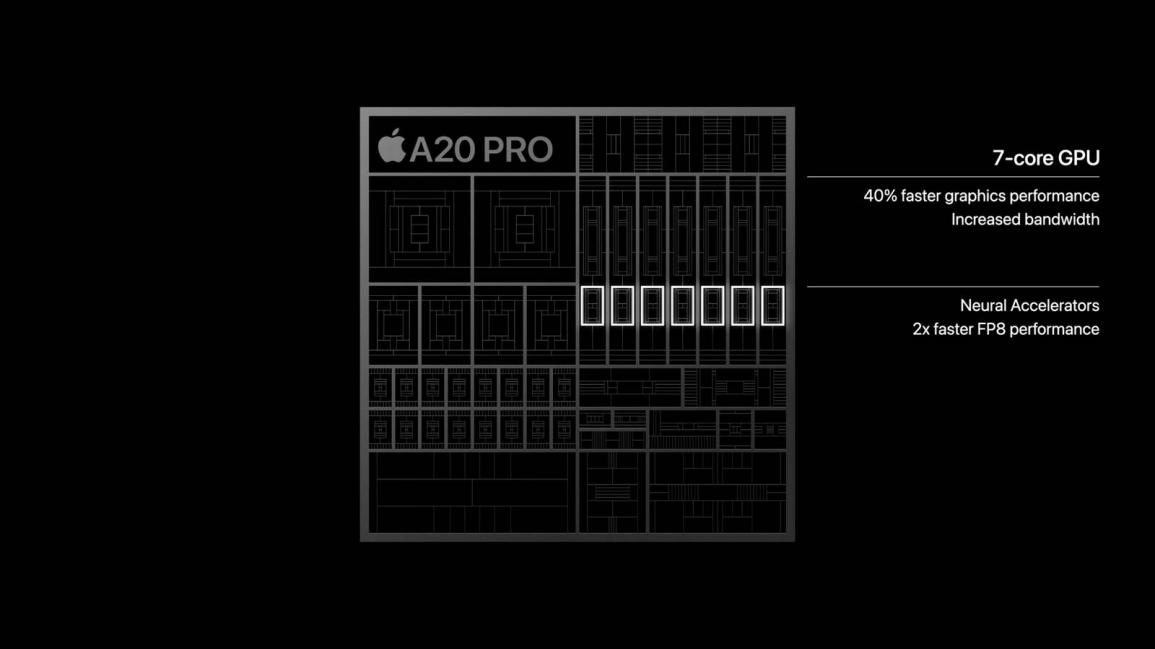
Now, on the graphics side, Apple has added an extra GPU core, upgrading to a 7-core GPU from a 6-core GPU on the A19 Pro. It brings up to 40% faster graphics performance and wider memory bandwidth. The GPU also gains new Neural Accelerators with 2x faster FP8 performance, which is aimed at running third-party LLMs on the device.
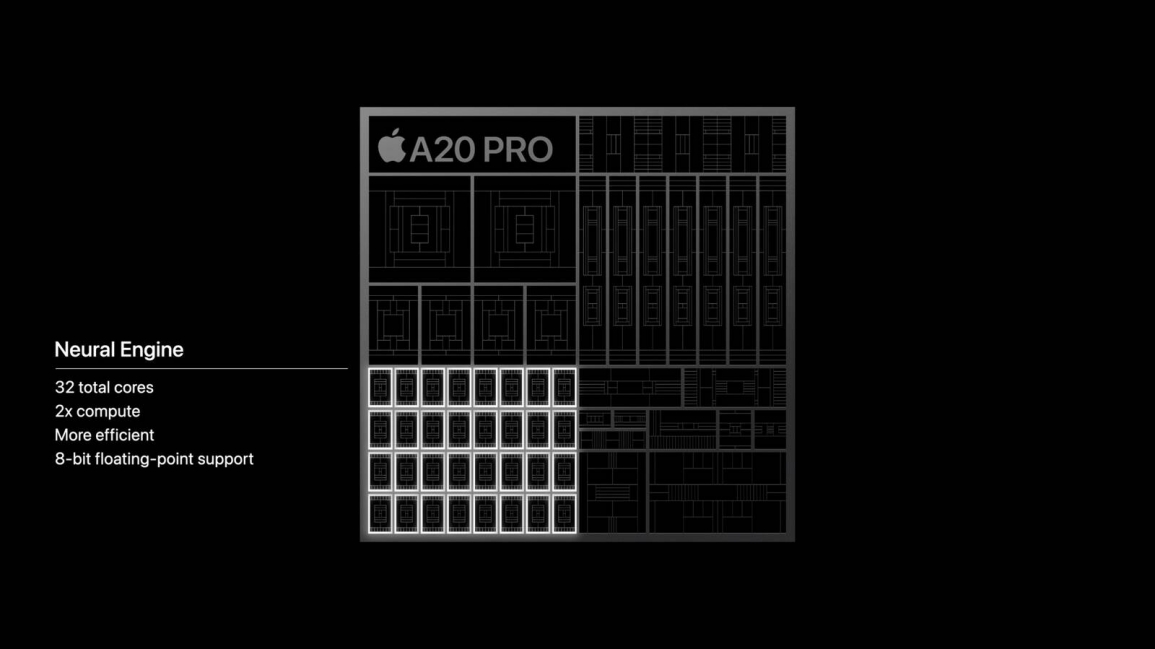
The Neural Engine sees a big change too. Apple has added a second engine for a total of 32 cores and it delivers 2x the computing power of the A19 Pro. Basically, you get a Dual 16-core Neural Engine just like the Apple M6 chip to take on the heavy lifting for on-device Apple Intelligence. Apple is saying the A20 Pro is the "ultimate chip for running advanced on-device models".
Apart from that, the A20 Pro brings redesigned packaging that Apple says is "inspired by our M-series chips." It brings the silicon and memory straight to the vapor chamber, so the chip can dissipate heat far more easily.
And with a next-generation vapor chamber, which has 3x the surface area than the one on the iPhone 17 Pro, the A20 Pro holds its peak performance for much longer. Apple claims up to 40% better sustained performance than the A19 Pro and 2x more than the A18 Pro.
Apple also called this "the widest memory interface we have ever shipped in an iPhone." The bus has been reportedly widened to 96-bit LPDDR5X, up from the 64-bit bus on the A19 Pro. The efficiency cores gain 8MB of L2 cache, compared to 6MB before, while the two super cores stick with 16MB.
Finally, Apple's in-house C2 modem powers 5G connectivity on the A20 Pro and brings satellite connectivity and 50% faster uploads while consuming 15% less battery. And in the US, Apple's new C2 modem supports mmWave 5G, which is remarkable. Apple is finally ditching Qualcomm's 5G modem.
Related Articles

How the A20 Pro Compares to Qualcomm and MediaTek Flagships
While the A20 Pro is powerful, it's facing stiff competition from Qualcomm and MediaTek. Qualcomm's current flagship, the Snapdragon 8 Elite Gen 5 chipset packs an 8-core Oryon CPU and the Adreno 840 GPU. Similarly, MediaTek's Dimensity 9500 processor includes Arm's new C1-series cores and the mighty Mali-G1 Ultra GPU.
Both chipsets already trade blows with the A19 Pro, especially in the graphics department. And in the CPU department, Android chips lead in multi-core while Apple has an edge in single-core performance.
And this year, Qualcomm's upcoming Snapdragon 8 Elite Gen 6 Pro (could be called Snapdragon 8 Elite Extreme Gen 6) and MediaTek's Dimensity 9600 Pro and 9600 Pro Max both move to a 2nm node. Not to mention, these chipsets are rumoured to push clock speeds up to 5GHz and and GPU throughput hard.
So, it will be interesting to see how the Apple A20 Pro challenges the upcoming flagship chipsets from Qualcomm and MediaTek.
Related Articles


